


 [1], [2] It was 1918. At the time, Berlin was a showcase city for crime. While the civilian population was not permitted to possess weapons during the war, serious criminals were heavily armed. They also used these weapons mercilessly when committing their crimes. During the First World War, large numbers of deserters and fellow citizens who had evaded military service were staying in Berlin and financing their livelihoods through crime. The police were barely able to keep the situation under control. In Moabit, a centrally located industrial and working-class district, an exceptionally large number of burglaries were taking place in Wilsnacker Straße. Residents and shopkeepers therefore asked police precinct 75 on Rathenower Straße for help. The precinct authorised police constable Heuser to patrol Wilsnacker Straße in the evenings outside his regular working hours in return for additional pay.
This crime casts a harsh light on the final months of the First World War (file note)
It was not long before the constable witnessed a burglary on 5 March 1918. The criminals realised that they had been spotted and fled down Wilsnacker Straße towards the Kleiner Tiergarten. Heuser managed to catch one of the burglars on Turmstraße. A companion then ordered the police officer to release his accomplice. Heuser refused, whereupon the accomplice fired twice at the officer. He collapsed unconscious. A sentry from the 93rd Infantry Regiment stationed on Turmstraße heard the shots and notified a watchman. The watchman found the constable lying lifeless in front of the building at Turmstraße 13. As no vehicle was available, another police officer on regular duty took Heuser to Moabit Hospital by tram. Heuser died at the hospital shortly after being admitted, without ever regaining consciousness.
At the same time, several suspects were arrested in the Turmstraße area who were apparently accomplices of the murderer. In all, the police succeeded in identifying four suspects who had been involved in the burglary and the subsequent murder. Although witness statements enabled them to identify the actual shooter and murderer of the police officer, the perpetrator managed to evade arrest. Those arrested were the baker’s apprentice Georg Scharf (17), butcher’s apprentice Max Müller (17), Albert Seltz (24) and Karl Kursidim (22).
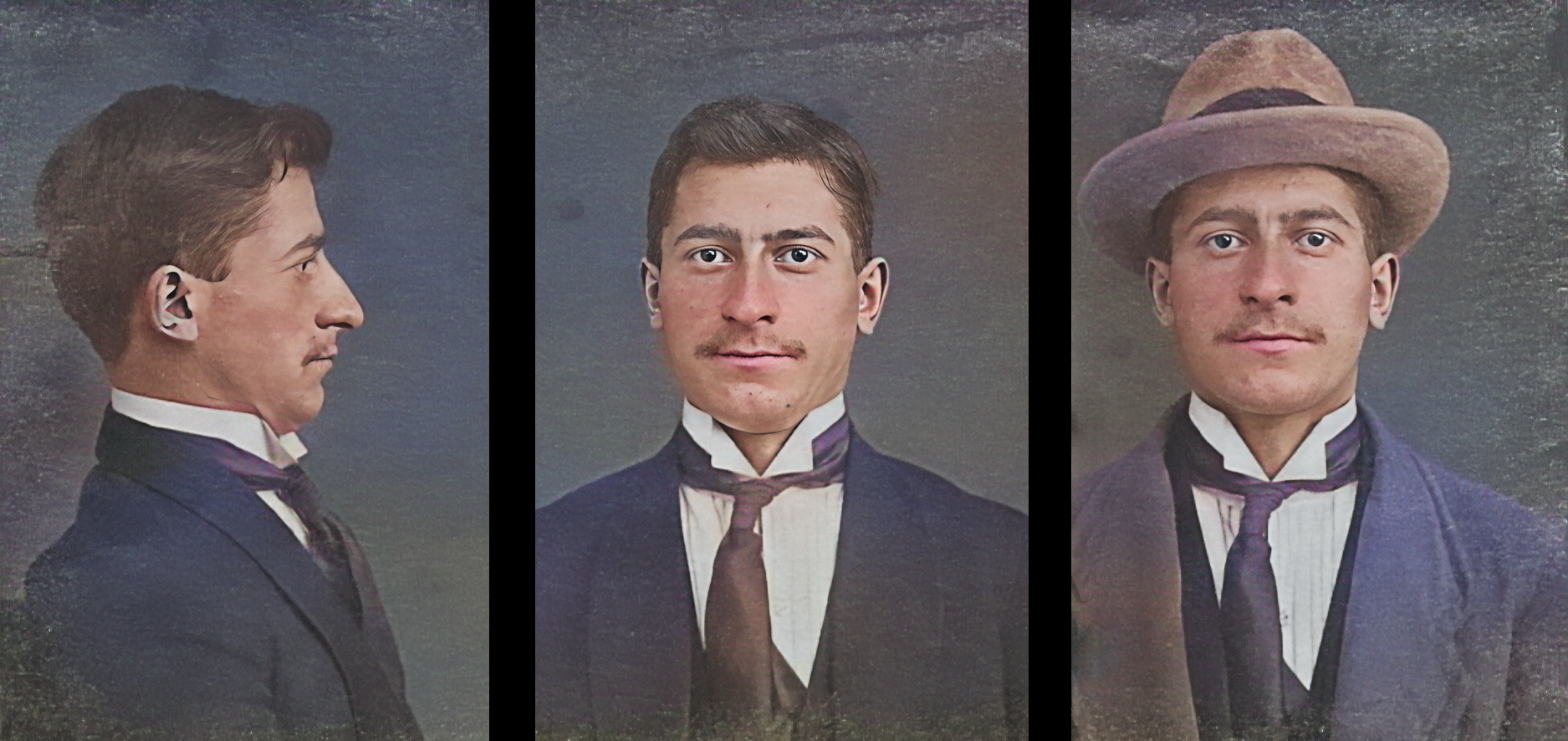

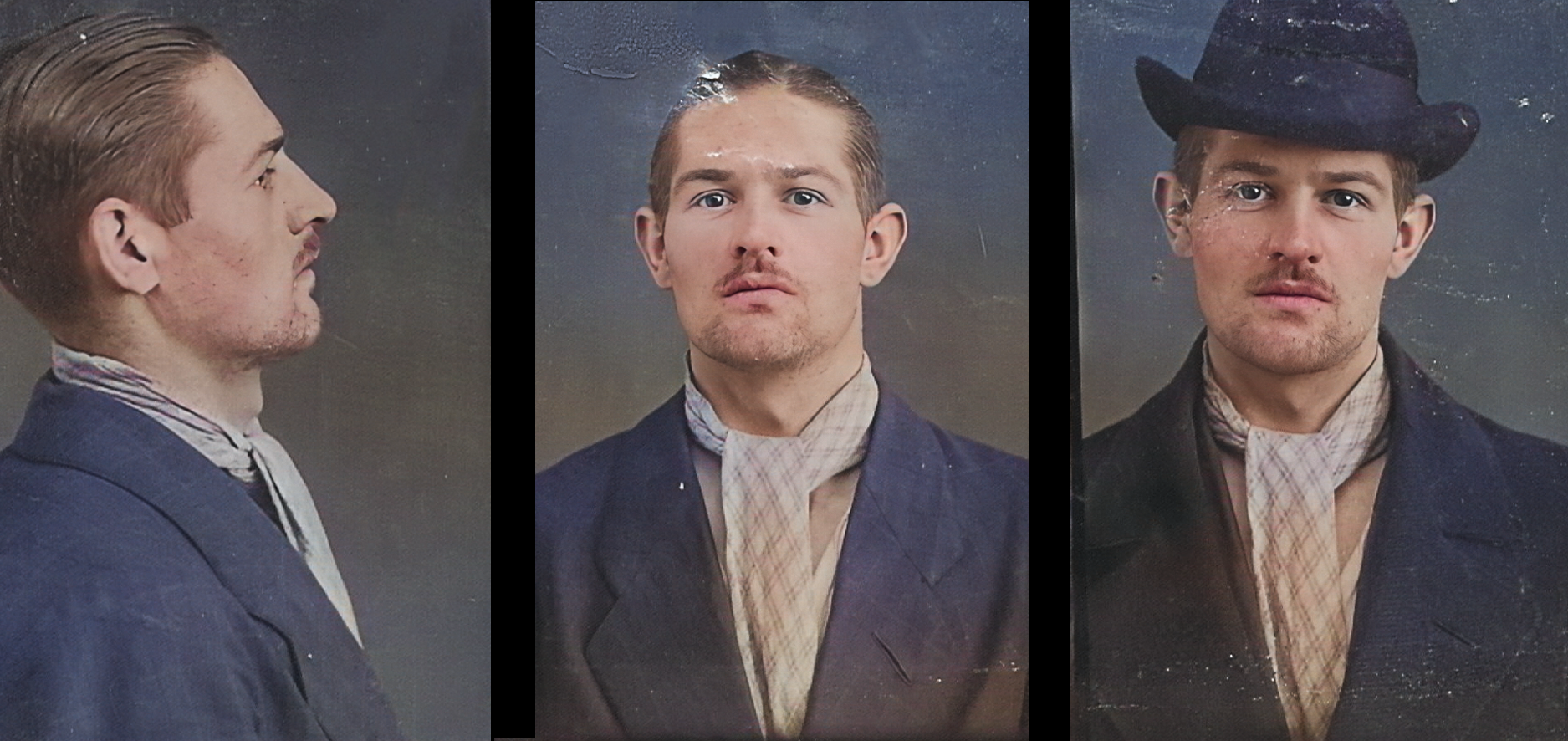

The Perpetrator Used Various Aliases
Based on several witness statements, the murderer was identified as the locksmith Erich Kuhl (* 2 July 1895 in Lomnitz). However, the police were still unable to apprehend the police officer’s killer, Erich Kuhl. What the Berlin police could not have known at the time was that Kuhl had long since left Berlin and was travelling around the German Empire under several aliases. He repeatedly told witnesses that he would shoot anyone who tried to arrest him. Kuhl’s final stop was Dortmund. There, too, he roamed the area with accomplices and committed burglaries. His last associates were Mizilaus Krause and Kasimir Kasirows, two Russian labourers. Kuhl remained extremely dangerous. According to witness statements, he ran through the streets while intoxicated and threatened passers-by with being shot. One miner only just managed to escape him. Kuhl’s criminal career came to an abrupt end on a Dortmund tram. By then, the Berlin police officer’s killer was wanted in connection with a burglary at a cigarette factory in Dortmund. Criminal police sergeant Ilsen recognised Kuhl and attempted to arrest him. Kuhl then shot the officer with a pistol he had in his jacket pocket. He subsequently shot himself with the same pistol.
Conclusion
An obscure old criminal case from Berlin, which would certainly have more to reveal if the investigative methods available at the time had been more advanced. Kuhl was clearly the leader of a gang of petty criminals before he became a murderer. Most of the burglaries that could be attributed to the gang took place in Moabit. From time to time, the group also moved its thefts to the Charlottenburg district. What is striking is that the burglaries always took place near U-Bahn stations on line U7 or another underground station (for example, the station at Wilhelmshavener Straße or Birkenstraße on line U9). According to the final report of the Berlin police, Kuhl was suspected of having committed further serious crimes. He was also linked to strike-related unrest in Berlin. He allegedly claimed himself (editor’s note: to the witnesses Pillon) that he had overturned a tram and then fired at an officer on the Gotzkowsky Bridge. The officer was said to have collapsed immediately. The police considered these accounts credible and believed that many more crimes could be attributed to Kuhl. Karl Kursidim’s involvement in the murder of the police officer remains somewhat puzzling, since he is hardly mentioned in the files at all. An article in the Berliner Tageblatt of 11 March 1918 claims that Albert Seltz lived at Wallstraße 6. This is very unlikely, however, because Wallstraße 6 is in Berlin-Mitte and was already a more expensive address at the time, which a petty criminal could hardly have afforded. It is more likely that the address was Waldstraße 6 in Berlin-Moabit, very close to Erich Kuhl’s place of residence. It also remains unclear whether Erich Kuhl shot himself immediately after murdering criminal police sergeant Ilsen in Dortmund (that is, directly on the tram where the crime took place) or shortly afterwards at another location. The dispute between the Berlin and Dortmund police authorities over the reward after the case was solved is also very interesting. The Dortmund police demanded a share of the total reward of 3,000 marks for their officers and apparently even intended to sue for the money. The Berlin police repeatedly pointed out that legal action to obtain the reward was excluded and that the compensation already paid was more than adequate. The Dortmund investigation into identifying the unknown dead man had been entirely incompetent (identifying the then-unknown suicide required criminal police inspector Bender to be sent there).

| Position | Crimes and the perpetrators’ places of residence |
| 1 | Erich Kuhl’s residence, Huttenstraße 65 |
| 2 | Erich Kuhl’s residence, Rostocker Straße 52 |
| 3 | On 3 December 1917, burglary at Julius Rosendorf’s hat shop, Beusselstraße 39. Perpetrators: Seltz, Kuhl and Karl Kursidim. Stolen property: hats worth 600 marks |
| 4 | On the night of 26 January 1918, a shop-window break-in at Gamm, Wilhelmshavener Straße 45. Stolen property: women’s handbags, chains and watch bracelets, worth 300 to 400 marks. Perpetrators: Kuhl and Karl Kursidim. |
| 5 | Last attempted burglary, Wilsnacker Straße 52, on 5 March 1918 |
| 6 | Murder scene, Turmstraße 13 |
| 7 | On 7 January 1918, burglary at Marie Gutmacher’s stationery shop, Alt-Moabit 82a. Stolen property: wallets and other items, worth 100 marks. Perpetrators: Erich Kuhl and Max Müller. |
| 8 | On 25 January 1918, a shop-window break-in at Conradi, Kaiserin-Augusta-Allee 89. Stolen property: fabric. Perpetrators: Kuhl and Kursidim. |
| 12 | Albert Seltz’s residence, Waldstraße 6 |
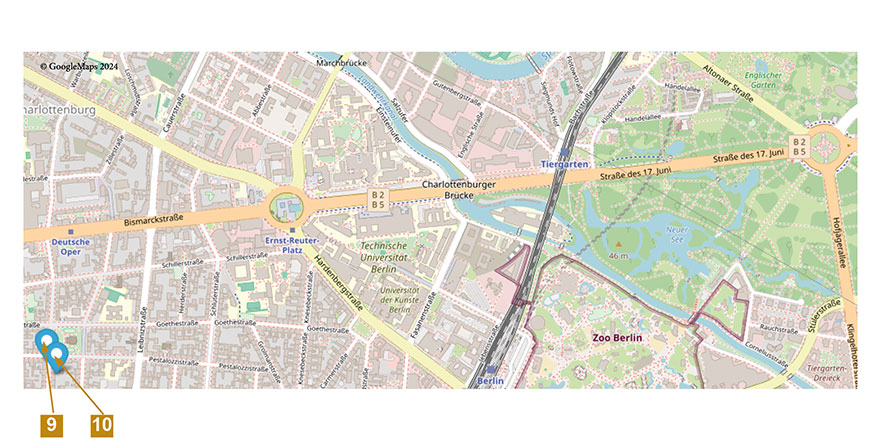

| Position | Crimes and the perpetrators’ places of residence |
| 9 | On 8 February 1918, burglary at Mrs Kreisberg’s fabric shop, Krumme Straße 41, Charlottenburg. Stolen property: fabrics worth approximately 25,000 marks. Perpetrators: Kuhl, Seltz, Georg Scharf and Max Müller. |
| 10 | On 22 February 1918, burglary at Berger’s lace shop, Krumme Straße 56, Charlottenburg. Stolen property: velvet, plush and lace worth 1,368 marks. Perpetrators: Kuhl, Seltz, Scharf and Müller. |
| 11 | On 3 December 1917, burglary at Julius Rosendorf’s hat shop, Beusselstraße 39. Perpetrators: Seltz, Kuhl and Karl Kursidim. Stolen property: hats worth 600 marks. |
Case Notes
Final Report
[2] During the night of the fifth of the month, police constable Heuser, who was on duty in civilian clothes, was found seriously wounded in front of the building at Turmstraße 13 at approximately 1:22 a.m. He died shortly afterwards at Moabit Hospital. It was established that two shots had been fired at him. As the post-mortem examination showed, one bullet pierced his left upper arm and the bone, entered through the armpit and tore his lung. The second bullet appears to have ricocheted somewhere. It was also found at the hospital and handed by the attending physician, Dr Lingender, to the night attendant Ulbrich, but Ulbrich dropped it. It could not be found again. A number of witnesses have since been identified who heard the shots and saw suspicious persons running from varying distances, and so on (Jocktomsen, Carstens, Gornetzke, Kulisch, Schmidt, Mrs Krzowa, Räthig, among others). No witnesses to the actual incident or the events leading up to it have been identified.
The crime has nevertheless been fully solved through the confessions of those involved who have so far been arrested and through statements they made to acquaintances shortly after the incident. The perpetrator is the locksmith Erich Kuhl, born on 2 July 1895 in Lomnitz, Meseritz district. He is the son of a teacher in Lomnitz. As on many previous occasions, Kuhl had gone out burglarising every night together with the 17-year-old former baker’s apprentice Georg Scharf and the 17-year-old butcher’s apprentice (nickname: Kocher), setting out from their meeting point at Seltz’s apartment. Their burglary tools were also taken from there. They looked for an opportunity to commit a theft in Wilsnacker Straße. Businesses on this street had recently been targeted by burglars so frequently that the shopkeepers had organised a special private watch service, staffed by officers from the responsible police precinct. That night, police constable Heuser was on duty there for the first time. The men immediately struck him as suspicious.
Müller and Scharf deny having committed a theft or attempted theft. Kuhl, however, told Pillon himself that Scharf had “jimmied” several doors. The officer eventually caught Scharf, took him by the left sleeve with his right hand and intended to take him to the police station. Müller seems to have kept more to the background, while Kuhl followed and called out to the officer to release the man he had arrested. The officer ordered Kuhl to leave, warning that otherwise he would shoot. Kuhl nevertheless followed him and was again ordered by the officer to move away. Instead of complying, Kuhl came right up close and fired twice at the officer from a distance of about one pace. The shots were fired from such close range that sparks sprayed into Scharf’s face. The officer then released Scharf and staggered away. Kuhl, Scharf and Müller fled. The participants’ indifference is illustrated by the fact that Scharf soon afterwards met a streetwalker and spent the night with her. Kuhl and his accomplices were responsible for a series of burglaries (for the sake of clarity, the relevant theft reports were not added to the main case files but were collected in a separate report file). See also: Overview of crime scenes and the perpetrators’ places of residence (editor’s note). The thefts listed as items 3, 4 and 5 (map position numbers; editor’s note) were already the subject of an indictment brought in case file 43.J.197/18 of Public Prosecutor’s Office I. Kuhl had falsely given his name as Bea and had therefore not yet been identified in those files. Incidentally, even the theft reports concerning the burglaries at Kappel’s and Conradi’s premises had not been consulted. This has since been arranged from here. The files 43.J.197/18 are enclosed.
Kuhl also appears to have played a prominent role during the strike. According to Pillon, Kuhl bought a pistol for the strike. At least, that is what he told Pillon. Kuhl’s landlady at the time, Mrs Göbel, stated that he had not been at home on the days in question. Kuhl told Scharf that he had helped overturn tramcars and had also beaten police officers with a stick. It should also be mentioned that several people living at the home of a Mrs Dunkel—the last landlady of Kuhl—were injured by gunfire during the strike unrest. Whether there had been any connection between Kuhl and these people before he moved in with Mrs Dunkel has not yet been established. In any case, Kuhl’s involvement in the strike unrest also requires thorough investigation in connection with the killing of Sergeant Thimisn*. In the Heuser case, Kuhl is likely to have made himself guilty of murder by his actions. He had previously told Pillon that if he were ever arrested, he would shoot anyone down. Kuhl had not been arrested, and the officer (note: Heuser) had not even confronted him. Rather, Kuhl had followed the officer and the arrested man of his own accord and then suddenly fired the fatal shot from a distance of one pace.
The overall circumstances therefore leave little doubt that this was an intentional killing carried out with deliberation. The extent to which Scharf and Müller are responsible for Kuhl’s shooting cannot be established as long as Kuhl has not been apprehended. However, the possibility that Scharf in particular may have been the one who urged Kuhl to shoot could perhaps be inferred from the fact that, days after the crime, he talked loudly in his sleep and was heard saying “Erich, shoot” while asleep (as stated by Mrs Seltz). The thefts, in which almost always the same participants and the same method of operation were involved, and whose number is unlikely to be much greater than has so far been established, are characterised as gang thefts. It can be assumed with certainty that Kuhl had also carried a firearm during earlier thefts and that the other participants knew this. This is supported by the testimony of witness Bruhnke, who stated that during a visit to Seltz’s apartment, Seltz, Scharf and Kuhl were in the room and she heard the clicking of a firearm from the kitchen. Mrs Seltz is said to have remarked: “Now they’ve got the revolver out again.” The participants were therefore guilty of repeated gang burglaries while armed with firearms. They remain in custody because a serious felony is at issue, they face severe sentences and, in view of the further offences they committed, there is also a risk of collusion.
Berlin, 10 March 1918.
Gennat
Criminal Commissioner
5 March 1918
Following the report submitted this morning concerning police constable Heuser, I hereby report the following to the Chief: The investigation to identify the perpetrator was immediately taken up this morning by Criminal Commissioner Gennat. Police constable Heuser had taken on private security duty for businesses in Wilsnacker Straße and had no reason to be in Turmstraße. What brought him there has not yet been established (perhaps he was pursuing a suspect). The crime was, however, undoubtedly committed in front of the building at Turmstraße 13. Turmstraße was not deserted at the time of the crime, at 1:22 a.m. The perpetrator or perpetrators fired two shots, one of which struck Heuser directly in the left armpit. This circumstance proves that he was hit at the moment when he had raised his left arm, probably to defend himself. The second bullet appears to have ricocheted somewhere. The shots were heard by a number of people. In addition to Grenadier Jockomsen, who had been posted outside the municipal school in Turmstraße, a doorman named Gornetzki saw the man run towards Bandelstraße immediately after the shots. However, only a very general description of him can be given.
According to the testimony of the merchant Kulisch, a man called out to him from a particular building in Turmstraße that two men and a woman had been involved in the shooting. The relevant witnesses are being sought. During the night just past, three young men attempted to break into a cellar in Wilsnacker Straße. This case is apparently unrelated to the Heuser matter. On the night of 22 February, police constable Heuser arrested a labourer named Beutler as he was about to break into the cellar of a master baker. This lead is currently being pursued. In addition, a labourer named Röhr has been provisionally arrested because precinct 75 has connected him with the crime. The suspicion is based on the fact that he is known throughout the area as a violent burglar and that his clothing matches the description given by witnesses. No final assessment can yet be made as to whether the suspicion against Röhr is justified.
8 March 1918
Further to my earlier reports, I inform the Chief that the murder of police constable Heuser has now been largely solved. The perpetrator is believed to be the locksmith Erich Kuhl, who has not yet been apprehended and was born in Lomnitz on 2 July 1995. Kuhl, who had only recently been taken into custody for several shop-window burglaries but was released by the court despite being without a home or employment, appears to have deserted from military service. Here he lived under various names: Reinhold Bea, born in Berlin on 16 September 1996, and Erich Ebert, born in Bredow on 3 July 1993. He was also registered under some of these names. It has not yet been established whether Kuhl is his correct name. That night, Kuhl was in Wilsnacker Straße with a baker’s apprentice named Georg Scharf, born in Munich on 4 August 2001, and a butcher’s apprentice named Max Müller, born in Langenphul on 28 March 2001, for the purpose of committing thefts. Police constable Heuser, who was on duty in civilian clothes, had noticed the three, apparently followed them and eventually detained Scharf. When he ordered Scharf to accompany him to the station, Kuhl intervened and asked the officer to release Scharf. When the officer refused, Kuhl fired two shots at him with a Browning pistol that he had until then been holding behind his back. This account is based on the statements of Müller, who was arrested yesterday, together with the results of other observations and findings. At our request, Scharf was arrested in Bottrop and is being brought here today. Kuhl has not yet been apprehended, although there is a prospect of catching him soon. Scharf and Müller have no previous convictions. No convictions are recorded for Kuhl either. The accused are charged with a considerable number of thefts of various kinds. The investigation is continuing.
18 April 1918
As the investigations in the Heuser murder case, file 704.IV 18.18, have established, the person admitted on 26 January was not Bea but the murderer of police constable Heuser, the locksmith Erich Kuhl, born on 2 July 1895 in Lomnitz, Meseritz district, whose whereabouts are currently unknown. At the time, Kuhl had assumed the name and personal details of Reinhold Bea, whom he knew and who was born in Berlin on 16 September 1896. He had also been entered in the registers of the police prison and remand prison under that name.
Berlin, 18 April 1918.
Criminal Police Sergeant
23 November 1918
Summary of the investigation findings in the Heuser murder case in Berlin and the Ilsen case in Dortmund. During the night of 5 March 1918, at about 1:30 a.m., police constable Heuser, who was on duty in civilian clothes, was found shot in front of the building at Turmstraße 13 by August Terting, a watchman for the “Nordwest” Property Owners’ Association, who lived at Hennigsdorfer Straße 14. He died on the way to Moabit Hospital without regaining consciousness. It was established that two shots had been fired at him. A number of witnesses were soon identified who had heard the shots and had seen suspicious persons running away from varying distances. However, no witnesses to the course of events, the actual crime or the events immediately preceding it could initially be identified. In the meantime, the Police President had offered a reward of 3,000 marks for important information from the public and/or for the capture of the murderer. The extensive investigations conducted in various directions were soon put on the right track by information provided by the tailor Wilhelm Scheffler, who lived at Zwinglistraße 32.
Scheffler recalled that a young man named Georg had come to him on the morning after the crime to have his coat repaired; the bottom button had been torn out of the fabric. When asked how this had happened, Georg reportedly explained that he had been with his friend Erich the previous night and had got into trouble with the police. As far as Scheffler knew, Georg lived with Selz at Waldstraße 6. The immediate inquiries in this direction led to the arrest of the knife grinder Albert Selz, who lived at Waldstraße 6. A baker’s apprentice named Georg Scharf, who was the same person as the Georg mentioned above, lived with him. Scharf was occasionally visited by a young man known to him as Erich Kuhl. When Selz reproached Scharf for not coming home on the night of 5 March 1918, Scharf told him that he (Georg) had been with Erich that night. They had both been standing at the corner of Wilsnacker Straße and Turmstraße when a man approached and detained him (Georg). Erich had then tried to get his friend released, but the man nevertheless walked away with him (Georg), and Erich followed. Erich then shot the man without further ado. They had both fled.
Further investigations then led to the arrest of Georg Scharf, who had meanwhile travelled to Bottrop in Westphalia to visit his parents, and to the arrest of the butcher’s apprentice Max Müller, who was staying with a tailor at Flensburger Straße 13. It was also established that the man called Erich was in fact the locksmith Erich Kuhl, born on 2 July 1895 in Lomnitz, who had successively occupied several lodgings here under various names (Reinhold Bea, Erich Ebert and Erich Franke). After persistently denying the charges for some time, Scharf finally admitted that he had committed various burglaries in Moabit and Charlottenburg together with Kuhl, sometimes in the company of other people such as Müller and Selz. They had also planned another burglary on the night of 5 March 1918 when Heuser appeared and detained him (Scharf). When Kuhl unsuccessfully ordered the officer to release him (Scharf), Kuhl simply fired twice at Heuser from a distance of about one metre. They then both fled. Müller had also been present shortly before the officer arrived. After initially denying it, he admitted this as well. Kuhl had also told him about the crime. A number of other witnesses were identified to whom Kuhl had confidentially described the incident in the same way as recounted above and admitted that he was the perpetrator. These included the turner Paul Pillon, who lived at Beusselstraße 41 with Kisselbach; the fitter Max Weitzner, of Feldstraße 54, Spandau; and the worker Linda Behring, who lived at Rostocker Straße 13 with Friedrich.
As already briefly mentioned, Kuhl came from Lomnitz in the Meseritz district, where his father is still a teacher today. His brother, who has since fallen in the war, was also a teacher. Kuhl himself was also supposed to enter the teaching profession, but did not make sufficient progress at the preparatory school. He therefore learned the locksmith’s trade and took a job with Siemens & Schuckert. He soon went astray, however, and most recently had been living solely from burglaries. Despite extensive inquiries, the only thing that could be established with certainty about his whereabouts after the crime was that he was in Spandau on 6 March 1918. There he approached the aforementioned witness Weitzner and asked him to sell him his papers. He intended to travel to Essen. He apparently carried out this plan, since on 7 March 1918 he was at the home of Scharf’s parents in Bottrop (near Essen). His trail was then completely lost for the time being. A few witnesses did come forward who claimed to have seen Kuhl again later, but it must be assumed that they had mistaken the person. On 10 July of that year, criminal police sergeant Ilsen was shot and killed on an electric tram in Dortmund while arresting a burglar who was carrying papers in the name of Johann Mika. Shortly after the crime, when escape appeared impossible, this alleged Mika shot himself in the head and was admitted to the municipal hospital in Dortmund in a seriously wounded condition.
According to the findings, Kuhl appears to have turned up in Dortmund around the middle of March that year. He stayed with various families but was never registered; evidently, he lived in Dortmund solely from burglaries, using young accomplices just as he had in Berlin. His associates in Dortmund were particularly the brothers Joseph and Mizislaus Krause, as well as the labourer Kasimir Kasirowski. It must be assumed that he committed two burglaries at a cigarette factory (Witte & Geck) with them, the last on 3 July 1918. While the stolen goods were being carried away early in the morning, the three or four perpetrators were observed by the previously mentioned witnesses, the Konetzny sisters. With their assistance, criminal police sergeant Ilsen, who had been assigned to the investigation, succeeded on 10 July that year in arresting one of the perpetrators, the man calling himself Mika (Kuhl). The officer was shot dead, however, and the perpetrator took his own life. There is no doubt that Kuhl committed many other offences in Dortmund. It was established, for example, that as early as 19 March that year he had again planned, together with the Krause brothers, an armed robbery against a Mrs Petersmann, who lived at Buchstraße 6. In June of that year, he had also threatened several people with being shot while brandishing a revolver, behaving like a man on a rampage, in Kirchderner Straße.
5 May 1919
The application by the Dortmund Criminal Police to award all or at least most of the 3,000-mark reward offered in the Kuhl murder case to Police Sergeants Ilsen and Wuttke and Criminal Sergeant Kohl is based on a complete misunderstanding of the factual and legal circumstances. At the time, a total reward of 3,000 marks had been offered, in the form of newspaper notices, for solving the series of murders. It goes without saying that priority in allocating this reward had to be given to those persons whose information first clarified the question of who was responsible. Only in second place could consideration be given to those who contributed to the capture of the perpetrator or brought it about. Once Kuhl’s identity as the perpetrator had been conclusively established, a poster bearing an image of the wanted man was put up on the advertising columns throughout Greater Berlin, among other measures, in order to capture him. An authenticated copy of the poster in question (one copy is held in volume 4 of the murder files) is attached. It expressly states that an appropriate portion of the already announced 3,000-mark reward would go to persons whose information led to Kuhl’s arrest. The Police Headquarters reserved the right to distribute the reward, excluding recourse to the courts. This wording makes it absolutely clear that only a portion of the total reward could be allocated for Kuhl’s arrest. Recourse to the courts is likewise expressly excluded. The distribution of the sum carried out here is therefore final and cannot be challenged through legal proceedings. But even on the facts, the total amount of 800 marks allocated to the Dortmund police is entirely appropriate. As already recorded in the files, 1,800 marks were paid to the person whose information clarified the question of who was responsible. Of the 1,200 marks allocated for Kuhl’s arrest, one third, or 400 marks, has already been paid to the Konieczny siblings. Two thirds, or 800 marks, was earmarked for the officers. The Dortmund officers have not been disadvantaged; in proportion to the shares, the Dortmund civilian witnesses have, if anything, been treated too generously. It should be noted here that the Dortmund Criminal Police cannot be spared the criticism that, by failing to take photographs and fingerprints of the then-unknown dead man, they made the identification of his person extraordinarily difficult and delayed it. Only after lengthy inquiries in Dortmund by the undersigned and Criminal Police Sergeant Bender was it possible to prove that the unidentified suicide was identical with Kuhl, who was wanted from here. There is no reason whatsoever to change the proposed distribution. The Dortmund police must be left to obtain the consent of those concerned to the allocation of the 800 marks among the officers there.
5 May 1919
Regarding the letter of 28 March of this year, K.J. No. 6119 (concerning the distribution of the reward offered for the capture of the police constable’s murderer, Erich Kuhl).
The view expressed in your letter, namely that the announced reward of 3,000 marks, or at least the greater part of it, is due to the Dortmund officers, is based on incorrect factual and legal assumptions. A total of 3,000 marks was offered through notices in the daily press. Naturally, priority in allocating this sum had to be given to those persons whose information clarified the question of the perpetrator’s identity. Only an appropriate portion could be allocated for Kuhl’s arrest. A notice posted on the advertising columns throughout Greater Berlin on 11 March 1918 expressly set out these guidelines for distributing the announced sum. An authenticated copy of the poster, the original of which is held in the murder files, is enclosed. As can also be seen from the attachment, the Berlin Police Headquarters expressly reserved the right to distribute the reward while excluding recourse to the courts. For this legal reason alone, the claims raised by the officers there cannot be pursued through civil proceedings. I place particular emphasis, however, on establishing that the distribution I made is fair in every respect in light of the actual circumstances. The Dortmund officers have not been disadvantaged; in proportion to the shares allocated to civilian persons in Dortmund (two thirds to one third), they have been treated entirely appropriately. I fully recognise their work. On the other hand, I cannot spare the authority there the criticism that, by failing to take photographs and fingerprints of the then-unknown murderer of the police constable, it made the identification of his person extraordinarily difficult and delayed it. With reference to my letter of 29 January, I once again request that you submit proposals for distributing the 800 marks among the officers there, together with declarations of consent from those concerned. The amount will then be transferred to you.
Press Reports
Berliner Tageblatt, 5 March 1918
Police Constable Shot Dead by Burglars – Silk Worth 150,000 Marks Stolen
Raids and robberies have now become commonplace throughout Greater Berlin. While the civilian population has been deprived of the possibility of self-defence by the Supreme Army Command’s ban on carrying weapons for the duration of the war, criminals are for the most part equipped with excellent firearms, which they use without scruple when necessary. Another bloody crime was committed in Moabit last night. As burglaries had frequently been carried out recently in Wilsnacker Straße without the perpetrators being caught, local shopkeepers turned to the responsible police precinct 75 on Rathenower Straße for protection. The precinct permitted police constable Heuser, who was assigned to Wilsnacker Straße, to take charge of guarding the street as a civilian during his off-duty hours in return for compensation. At around 2 a.m., the officer saw several suspicious persons about to break into the building at Wilsnacker Straße 53. When the burglars realised that Heuser had interrupted them, they fled towards Turmstraße and the Kleiner Tiergarten. The officer pursued them. Shortly afterwards, the sentry of the 93rd Infantry Regiment, which was stationed in the municipal school in Turmstraße, heard a shot and saw a man running down Bandelstraße. The sentry notified a watchman. When the latter investigated, he found Heuser lying unconscious in front of the building at Turmstraße 13 with a gunshot wound to his left armpit. As no other transport was available, a uniformed police constable took his seriously wounded colleague by tram to Moabit Hospital. Heuser died there shortly after admission without regaining consciousness. At first it was believed that the men surprised by Heuser at Wilsnacker Straße 52 had killed the officer. It emerged, however, that these two young men had already been surprised by a watchman and arrested when Heuser received the fatal shot. It must therefore be assumed that the officer encountered burglars elsewhere and was shot by them. The nature of the injury suggests that Heuser was involved in a struggle with the criminals, since the wound could only have been inflicted while the officer had raised his hand in a defensive movement. According to police findings, Turmstraße was still very busy at the time in question. It is all the more remarkable that the perpetrator managed to escape unnoticed. A reward of 3,000 marks has been offered for his capture. Commissioner Gennat is directing the investigation.
Berliner Anzeiger, 5 March 1918
Police Constable Shot Dead by Criminals
Once again, an officer has been struck down by criminals while carrying out his duty, and this incident is yet another example of the unsatisfactory state of public safety in Berlin at present. We have received the following report: Police constable Heuser of precinct 75 on Rathenaustraße went out in civilian clothes yesterday evening in order to better pursue burglars who have been making every district unsafe for some time. At about 1:30 a.m., a sentry from a unit of the 93rd Infantry Regiment stationed in the municipal school in Turmstraße heard a shot. Immediately afterwards, he saw a man running down Bandelstraße. The sentry notified a watchman. When the latter searched the area, he found Heuser lying unconscious in front of the building at Turmstraße 13 with a gunshot wound to the chest. As no horse-drawn vehicle was available, a uniformed police constable took his seriously wounded colleague by tram to the hospital in Moabit. Heuser died there shortly after admission without regaining consciousness. The crime of which he was the victim is being considered in connection with a burglary committed that night at a business at Wilsnacker Straße 52. It emerged, however, that the perpetrators there, two young men, had been surprised by a watchman and already arrested when Heuser received the fatal shot. It must now be assumed that the officer encountered a burglar elsewhere and was shot by him while in pursuit. The search for this criminal is in full swing, but is greatly hampered because the officer who was shot could no longer provide any information. It is to be hoped that the authorities will succeed, through appropriate measures and tighter security, in curbing the activities of the criminal element, which has recently become increasingly violent, in order to protect the public.
Berliner Morgenpost, 6 March 1918
Police Constable Shot by a Burglar. 3,000-Mark Reward
On the night leading into Tuesday, police constable Heuser of police precinct 75 was so seriously wounded by an unknown assailant, who shot him in the left side of the chest in Turmstraße in Moabit, that he died a short time later. The perpetrator, a burglar whose identity is still unknown, escaped. The Police Headquarters has offered a reward of 3,000 marks for his capture. Recently, numerous business premises have been burgled, particularly in Moabit, in Wilsnacker Straße and the surrounding area. To counter the insecurity there, various police officers have been patrolling the streets at night in civilian clothes. Heuser was on this duty last night. At about 1:30 a.m., a sentry from a replacement battalion housed in the municipal school in Turmstraße heard a shot. Immediately afterwards, he saw a medium-sized man wearing a light-coloured, soft felt hat turn from Turmstraße into Bandelstraße and hurry away. A private watchman found a man lying unconscious in front of the building at Turmstraße 13 a few minutes later, with a gunshot wound to the chest. At Moabit Hospital, the man was identified as police constable Heuser, who died shortly afterwards without regaining consciousness. Shortly before these events, an attempted burglary had taken place in Wilsnacker Straße, where the perpetrators, two teenage boys, had been arrested by a private watchman. It is not unlikely that the man who shot police constable Heuser was an accomplice of the two. Criminal Commissioner Gennat at Police Headquarters is receiving further information on the matter.
Berliner Tageblatt, 11 March 1918
The Murder in Turmstraße. The Perpetrator Is Known but at Large
The murder of police constable Heuser, who, as reported, was found seriously wounded in front of the building at Turmstraße 18 on 5 March and died at Moabit Hospital without regaining consciousness, has now been solved. It was established that two shots had been fired at him. As the post-mortem examination showed, one bullet pierced the left upper arm and the bone, entered through the armpit and tore the lung. The second bullet was found in Heuser’s clothing. No witnesses to the crime itself could be identified, but a number of people came forward who had seen the suspected perpetrators fleeing. On the basis of this information, three men were arrested who had attempted to break into a building in Wilsnacker Straße in the company of a fourth man but had been driven away and pursued by Heuser. They are the 17-year-old baker’s apprentice Georg Scharf, who had only recently been dismissed from his apprenticeship, the butcher’s apprentice Max Müller, of the same age, and the 24-year-old Albert Seltz of Wallstraße 6. According to their confession, the actual murderer was their now-fugitive companion, the 23-year-old locksmith Erich Kuhl. The police have issued the following wanted notice for him: 3,000-mark reward. Murder of police constable Heuser! Locksmith Erich Kuhl wanted! The locksmith Erich Kuhl, born on 2 July 1895 in Domnitz, Meseritz district, and resident at Huttenstraße 65 until the end of last year, shot police constable Heuser in Turmstraße on the night of 5 March 1918. Kuhl has not yet been apprehended. He is apparently hiding somewhere in this area. From the beginning of this year, he called himself the locksmith Erich Ebert, born on 2 July 1893 in Bredow near Stettin, and also lived at Rostocker Straße 52 under that name. He has also falsely used the names Reinhold Bea, born in Berlin on 16 September 1896, and Franke. He frequented drinking establishments in Moabit, particularly in Huttenstraße. He is approximately 168 cm tall, slim, has a pale face and deep-set eyes, and walks slightly stooped. His beard and head hair, and reportedly also his eyebrows, are clean-shaven. He has a gold tooth in the upper right part of his mouth and usually wears a pince-nez. Most recently he was wearing a black cloth overcoat reaching to the knees, a dark jacket suit with a belt, trousers turned up at the bottom and a soft felt or velour hat. An appropriate portion of the already announced reward of 3,000 marks will go to persons whose information leads to Kuhl’s arrest. The Police Headquarters reserves the right to distribute the reward, excluding recourse to the courts. Information may be given to any police station or to the Berlin Criminal Police, Chief Criminal Commissioner Gennat. Further inquiries revealed that Kuhl had worked for some time at the German Arms and Ammunition Factory, earning 180–200 marks a week. He then joined the three young men already arrested and began committing burglaries with them. They regularly met at Selz’s home and set out on their raids from there.
B.Z., 11 March 1918
The Murderer of Police Constable Heuser
The bloody crime against police constable Heuser, who was shot dead by burglars while on patrol in Wilsnacker Straße in Moabit, has now been solved. Heuser was on a surveillance patrol in civilian clothes. In Wilsnacker Straße he noticed three suspicious young men and became involved in a scuffle with them. The third man stayed somewhat apart, suddenly drew a revolver and shot Heuser from behind. All three then fled. The two men whom Heuser had confronted were arrested, while the third man, who shot him, escaped. It has since been established that the man in question is a certain Erich Kuhl, who had been staying without registering at various lodgings in Moabit in recent weeks. The Criminal Police are investigating to establish his whereabouts. A reward of 3,000 marks has been offered.
Daily Report, 12 March 1918
Murder of Police Constable Heuser! Locksmith Erich Kuhl Wanted!
The locksmith Erich Kuhl shown above, born on 2 July 1895 in Lomnitz, Meseritz district, and resident at Huttenstraße 65 until the end of last year, shot police constable Heuser in Turmstraße on the night of the 5th of this month. Kuhl has not yet been apprehended. He is apparently hiding somewhere in this area. From the beginning of this year, he called himself the locksmith Erich Ebert, born on 2 July 1893 in Bredow near Stettin, and also lived at Rostocker Straße 52 under that name. He has also falsely used the names Reinhold Bea, born in Berlin on 6 September 1896, and Franke. He frequented drinking establishments in Moabit, particularly in Huttenstraße. He is approximately 1.68 m tall, slim, has a pale face and deep-set eyes, and walks slightly stooped. His beard and head hair—and reportedly also his eyebrows—are clean-shaven (unlike in the photograph!). He has a gold tooth in the upper right part of his mouth and usually wears a pince-nez. Most recently he was wearing a black cloth overcoat reaching to the knees, a dark jacket suit with a belt, trousers turned up at the bottom and a soft felt or velour hat. Kuhl is no longer a soldier, unlike in the photograph. An appropriate portion of the 3,000-mark reward already offered to civilians will go to persons whose information leads to Kuhl’s arrest. A substantial reward is also promised to officers for apprehending the wanted man. Please send information to Criminal Commissioner Gennat, telephone 428, room 48.
[1] Berlin State Archive_A_Pr_Br_Rep_030-03_85
[2] Berlin State Archive_A_Pr_Br_Rep_030-03_1247
Concluding Note
The contents of the files have been reproduced largely verbatim and should be read accordingly. Only in a few passages were sentences adjusted for better readability. Some names or sentences were almost impossible to decipher because of their age; attempts have been made to reconstruct them to the best of our knowledge and belief, but the accuracy of these reconstructions cannot be guaranteed. Various photographs from the investigation files have been digitally edited and enhanced to provide a realistic depiction of the offenders.



Add comment