


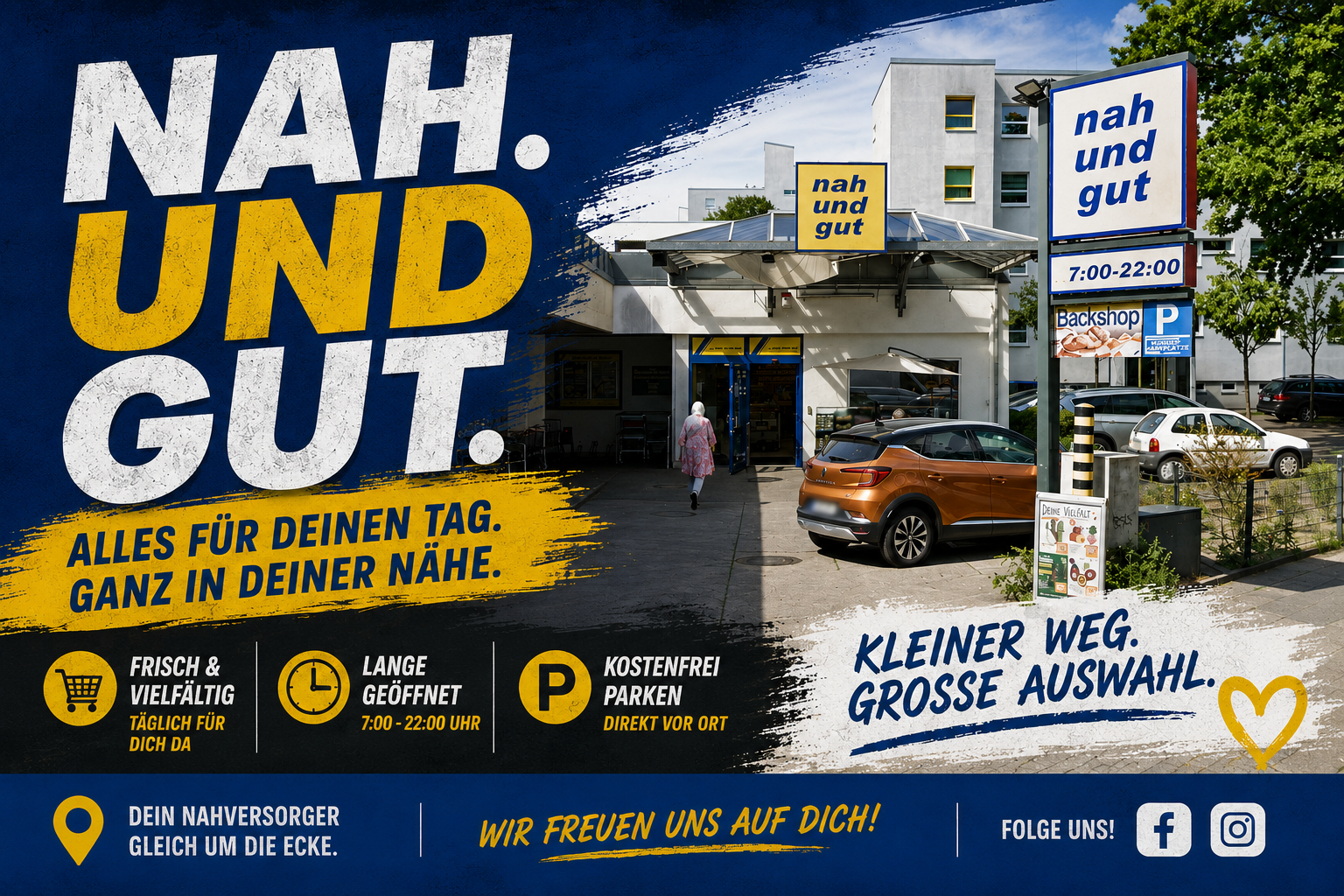
 If you have always wanted to experience what it feels like when a supermarket offers the selection of a kiosk at delicatessen-store prices, you have come to the right place. The shop is small, the selection correspondingly limited, and the prices rather self-confident. For a major weekly shop, it is therefore better to go somewhere else. For the classic emergency purchase of “Damn, we’re out of beer”, however, it will just about do. It is worth taking a close look at the best-before dates. With so few customers, some items can sit on the shelves for quite a while. The bottle-return machine is particularly reliably unreliable. It seems to regard being in working order for any sustained period as an unnecessary burden. As a result, deposit bottles regularly have to be accepted by staff. In itself, no problem. In itself. Because anyone who dares to turn up with deposit bottles 15 minutes before closing time is apparently made to feel by certain employees as though they have just triggered a major personal deployment of the entire workforce. That is certainly not what you would call friendly. Some encounters also leave a rather disconcerting impression: As a German customer in a supermarket with an oriental character, you could almost get the feeling that you are not necessarily part of the preferred target group. Particularly unpleasant is the thought that, in an employee’s eyes, a German customer might effectively be regarded as a “kafir” – that is, an unbeliever or non-Muslim. To be clear, this term was not actually used in the situation described. The point is rather the impression that distant or dismissive behaviour can leave with the person on the receiving end. Of course, this remains a personal perception and is not proof of any particular attitude. Perhaps it was simply a bad mood. Perhaps stress. Perhaps just a particularly bad day. However, if German customers repeatedly get the feeling that they are tolerated rather than welcome, it is fair to ask why. The irony is hard to miss: the shop is in Germany, customers pay with German money, and in the end all they want to do is an ordinary bit of shopping or, even more demanding, return their deposit bottles. That should not require a major cultural event. The constant use of the informal “du” by some employees also comes across as disrespectful. An informal tone can be pleasant – provided both sides find it agreeable. Dropping the formal “Sie” does not automatically make an interaction friendlier.
It is important to stress that this does not apply to all employees. The women at the checkout in particular are experienced as friendly and helpful. That makes the behaviour of certain male employees stand out all the more. The overall verdict is therefore mixed: the shop is useful for a small emergency purchase. Customer service, however, still has considerable room for improvement. Perhaps some employees could benefit from a refresher in customer service, courtesy and the astonishing realisation that German customers are allowed to shop there too. If German customers already get the impression in a supermarket that they are not really wanted – perhaps even regarded as a kind of “kafir” – then something is definitely going wrong with customer service. And if dealing with customers personally is really that difficult, there is always the most elegant solution of all: close the shop and seek a new line of work. Preferably far away from contact with “German” customers, perhaps in a shisha bar, betting shop, driving school, greengrocer, kebab shop or barbershop. Then the community can keep to itself and will not have to deal with those troublesome unbelievers.



Add comment