


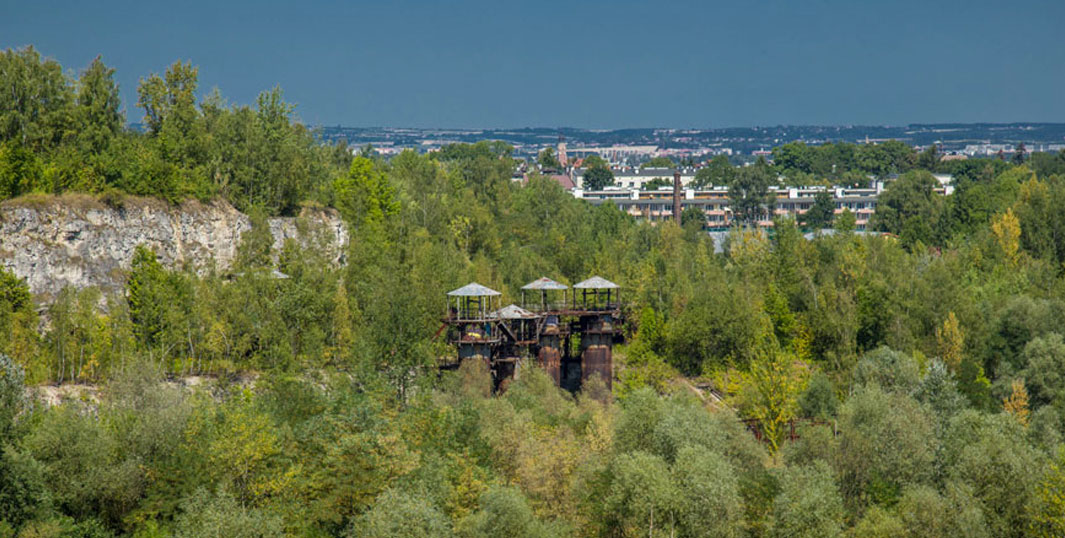
 Forgotten and abandoned – a film set from Schindler's List
Krakow, Poland's second-largest city, is located in the south of the country. The drive can take quite a while, and travelling by train to the Lesser Poland Voivodeship is not much faster. Flying is probably the most convenient option. Flights to Krakow are not particularly frequent, however, so tickets are not especially cheap. Even so, flying is the best choice for a short trip. The plane was half empty on the outbound flight. John Paul II Krakow Airport made an extremely modern and well-organised impression. A train to Krakow's main railway station runs every 30 minutes. Tickets can be bought from the machine on the platform or on the train (cash only on board). The machine accepts cards and also offers a German-language option. The journey to the main station takes 20 minutes and costs 9 Polish zlotys.
Krakow gained international recognition through the seven-Oscar-winning film Schindler's List. Many locations along the Vistula were used as filming locations. My first stops were therefore the now largely forgotten Plaszow concentration camp, the former Schindler factory and Kazimierz, Krakow's former Jewish district, where scenes set in the ghetto were filmed. The former Plaszow camp has practically disappeared. It was built on the site of two devastated Jewish cemeteries. After the camp was closed, the area was quite literally allowed to grow over. Today, hardly any traces remain. A few ruins and bunkers are all that recall the former purpose of this enormous site. Memorial stones have been erected in several places. Today, people use the grounds for jogging and walking their dogs. The many fire pits and empty bottles suggest that lively gatherings take place here at night.


The villa of Amon Göth, the butcher of Plaszow, is still standing. The building looks more like a respectable middle-class home. It stood outside the camp, not on a hill as shown in the film. It is highly doubtful that Amon Göth actually shot prisoners from its balcony. A rise behind the house would have obstructed the view into the camp. I do not know whether that hill was already there 70 years ago. It is assumed that Amon Göth fired on prisoners from the so-called Grey House near the camp, formerly the building of the Jewish burial society and later converted by the SS into a detention centre and torture chamber. The Grey House is still standing near the Göth villa, by the entrance to the site. The Austrian mass murderer’s house is currently undergoing extensive renovation after years of decay. Behind the former camp is a disused quarry. The camp scenes in the film were shot here. Remains of the sets can still be found in the quarry. Some of the fences and the path made from Jewish gravestones have survived from the film production. After 25 years, nature has reclaimed the area. The entire quarry is overgrown and is hardly recognisable as a filming location.


It is about a 15-minute walk from Plaszow camp to the former Schindler factory. The building is well preserved and was actually still used for production until a few years ago. Today, the factory houses a museum devoted to contemporary history. Tourists queue all the way out onto the street. The interior scenes in the film, however, were not shot in this building. A few kilometres farther on, after crossing the Vistula bridge, lies another legendary filming location: Kazimierz. In the early 1990s, this now fashionable district was run-down and therefore an ideal setting for the black-and-white drama. Film tourism helped the neglected neighbourhood prosper again. Walking through the area brought many scenes to mind. The original ghetto was in the Podgórze district, on the other side of the Vistula. Only memorial plaques and fragments of the ghetto wall remain there today.
Oskar Schindler's house was north of the Jewish quarter of Kazimierz. Nothing now marks the former home of the industrialist. Kazimierz has undergone extensive renovation in recent years. Only a few buildings still hint at how neglected the former Jewish district once was. The neighbourhood is now full of restaurants and bars. Crowds stream through its streets and alleyways, while electric carts take tourists around everywhere. Krakow seems to be bursting at the seams. The crowds are even worse at Wawel Castle and in the Old Town. I postponed visiting the latter because of the enormous crowds. Despite tourists descending on the city like locusts, prices have remained pleasantly low. A meal including drinks can be had for less than 10 euros – practically canteen prices.


Conclusion: Although I ultimately had to skip Krakow's Old Town, the short visit was well worth it. The historical sites and Kazimierz easily filled the day. It was fascinating to visit the places where these events took place and recognise the film locations. With temperatures above 30°C, however, walking around all day was at times a real ordeal. I will make up for what I missed on a visit during a quieter season, ideally in winter.



Add comment