


Mauritius has an extraordinarily good image, yet many visitors return home disappointed. Why is that? A little research online is enough to find out. Anyone who ventures away from the luxury hotels and golf courses quickly discovers that the island does not necessarily look like the glossy brochures or the heavily Lightroom-edited pictures on the internet.
 Mauritius’ east coast.
Let us take a brief look at the history of this archipelago, without going into too much detail; anyone can read up on that online. First, its geographical location, which many people are still surprisingly unfamiliar with: Mauritius lies 857 kilometres east of Madagascar in the Indian Ocean. The island of Mauritius is accompanied by several smaller islands, the second-largest being Rodrigues. The French island of Réunion is another 200 kilometres away. All of these islands belong to the Mascarene Islands. Mauritius was shaped by its last colonial powers, France and Britain, and has been independent since 1968. Traffic drives on the left. There is no single official language; English and French are spoken, although French is preferred. The currency is the Mauritian rupee. Mauritius has no military, and its main source of income, as in Cuba, is sugar cane. Mauritian rum is well known and popular. Hindus, Christians and Muslims currently live peacefully alongside one another on the island.
 Casuarina groves and volcanic rock instead of palm trees – the real Mauritius.
Rocks, mountains, gorges and forests. They say holiday dreams come true in Mauritius. But beyond the swimming pool there is a world that few tourists venture into. The sailors who first discovered the island found lush vegetation. Because Mauritius lay on the route to India, pirates repeatedly lay in wait for merchant ships in the surrounding waters. This gave rise to many legends about fabulous treasures supposedly hidden on the island by pirates. To this day, however, none of these treasures has been found. Mauritius is also known for its dangerous reefs, which have claimed numerous ships over the centuries.
Mauritius. Anyone who hears the name naturally thinks first of a famous postage stamp (a misprint), and of an island with palm trees, turquoise water, white sandy beaches, golf courses and luxury hotels. Most people also think of exorbitant prices. And that is true. Anyone visiting a travel agency or searching online for a package holiday to Mauritius will find almost exclusively luxury accommodation. Many people do not know that there are alternatives – or perhaps the wealth on display makes them irrelevant to some. Mauritius is still Africa, and that makes it quite different from the Seychelles or the Maldives. It is possible to explore the island independently, far away from luxury tourism. One reason is its manageable size: just 47 kilometres wide and 64 kilometres long.
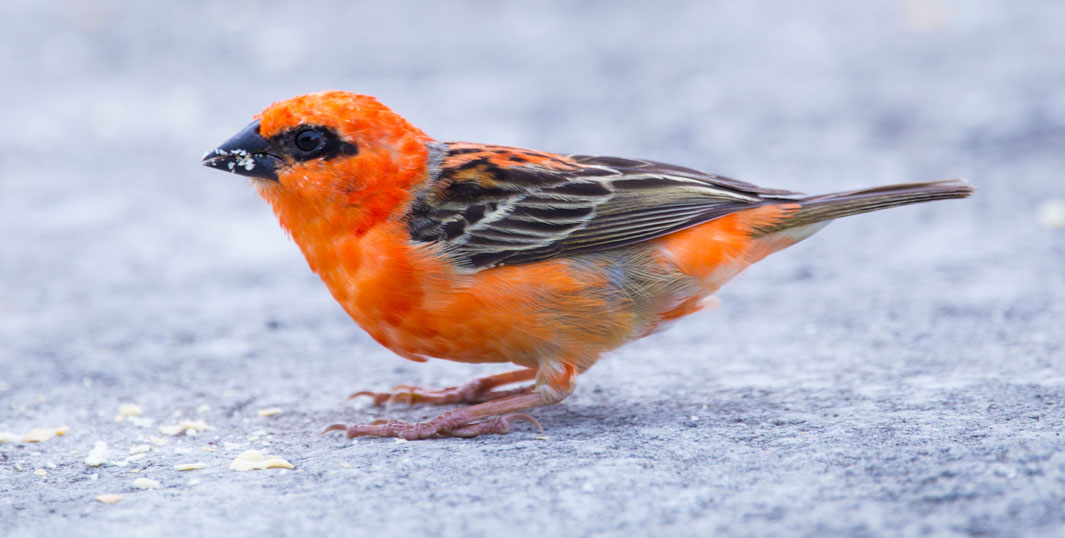 The Mauritius fody can be seen everywhere.
Incidentally, the palm trees lining the beaches in many travel-portal photographs are essentially fake: they were planted. The ordinary beaches of Mauritius are bordered by shade-giving casuarina trees, not palm trees. Palms repeatedly fall victim to the island’s severe weather conditions.
 Public beach at Trou d’Eau Douce.
At immigration in Mauritius, only four of the eight counters were open, causing a long queue. Even so, I was outside the airport with my passport checked and luggage collected within 20 minutes. So far, everything had gone well. The only problem was that the driver was not there. He eventually turned up an hour later – that is Africa for you. After a drive of about 30 minutes, I reached Trou d’Eau Douce. The Golden Shell Residence, however, was a very basic apartment building: modest accommodation in a small village in the north-east of Mauritius. No 5,000-euro resort, just a simple room, terrace and bathroom. You can also read my review of the Golden Shell Apartments.
Although Trou d’Eau Douce cannot compete with the beaches on the island’s west coast, I was still happy with it. Above all, I did not see a single tourist on the public beaches of Trou d’Eau Douce during my stay. A little farther north is Palmar Beach, which was just as deserted. Here you see the island’s true volcanic origins. One thing that stands out is that many beaches are not cleaned. In other countries around the Indian Ocean, seaweed is swept up and removed, at least on most hotel beaches. The picture of supposedly dazzling white beaches from the holiday brochures was therefore shattered. The amount of rubbish floating in the sea was unbelievable, too: plastic bottles everywhere, and entire piles of dirt and waste behind the trees.
 This is Mauritius, too: dirty beaches covered in rubbish.
Trou d’Eau Douce is surrounded by hotels of various categories. Nevertheless, hardly anyone from the resorts seems to wander into the nearby village. At most, buses take visitors to the harbour for the crossing to Île aux Cerfs. The village itself has a few restaurants at moderate prices, though they are not particularly inviting. Otherwise, it consists mainly of mini-markets. The overall picture is rounded off by abandoned houses and unfinished buildings. You also have to organise yourself differently here, because everyone opens and closes whenever they feel like it. A restaurant may simply be closed even though the internet says it should be open. The food is reasonably good, but not exactly a bargain. Portions are often rather “modest” for the price.
 Trou d’Eau Douce is characterised by dogs, building ruins, vacant properties and decay.
To explore the area around Trou d’Eau Douce, I rented a scooter. With most rental providers, contracts and paperwork are apparently not customary. Nobody even asks to see a driving licence. Risky, but inexpensive. I travelled north along the coast as far as Poste de Flacq and south to just before Mahébourg. The journeys took forever, partly because of the poor road conditions. Finding your way was not always easy, even though it is hard to get lost on an island barely the size of London. Signposting? Often very poor. Petrol stations? Easy to find only in the larger towns. On some drives through the countryside I could not tell whether I was passing through an officially recognised town or an illegally built favela. The smell of faeces and urine filled my nose as I rode through some villages. Welcome to Africa. It quickly became clear that there was no need to explore the island’s interior. As far as settlements are concerned, it resembles other East African countries I know.
There is little point in joining expensive tour companies to explore the island, especially when you then have to spend the entire day with a group. Renting a car or hiring a taxi (from around 50 euros a day) is better and cheaper. You can then visit the sights you choose at your own pace. Here are a few possibilities:
Parc national de Bras d’Eau
A wonderful national park for which you should allow several hours. A longer walk can be exhausting in the heat. Monkeys line the paths. Admission is free.
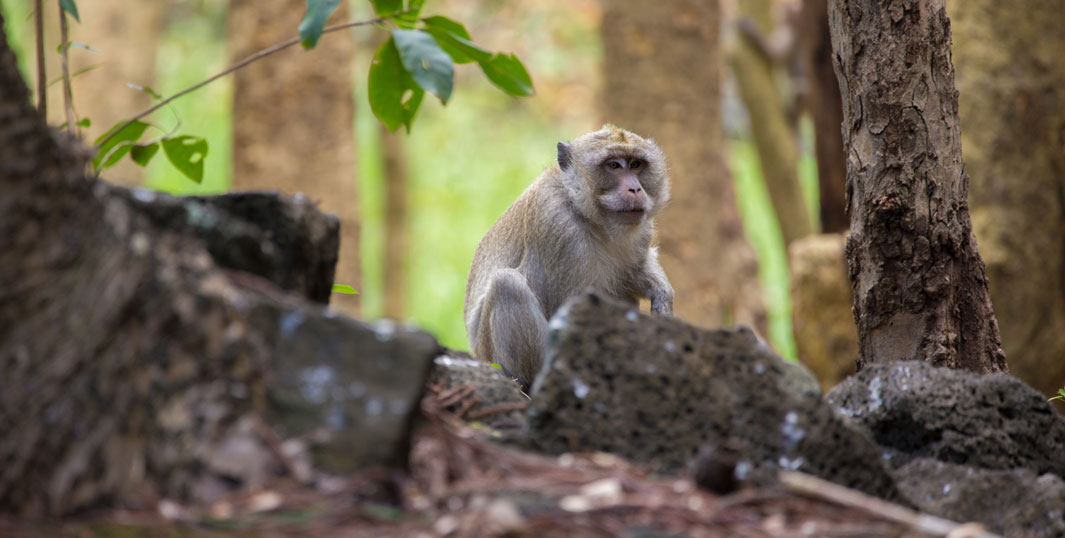 The residents of Parc national de Bras d’Eau.
Paul and Virginie Monument
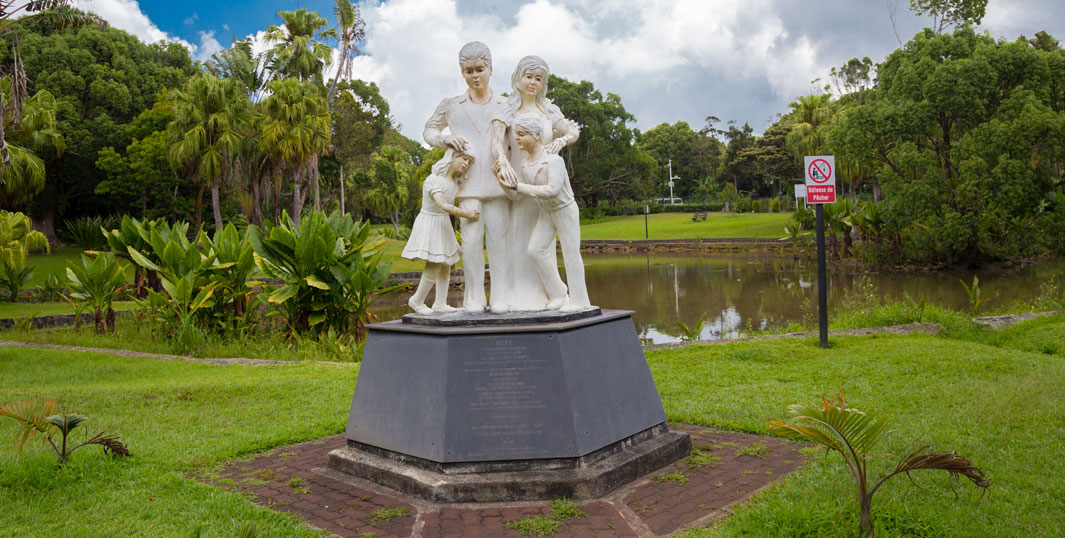
A monument to a legend. According to the story, Paul was waiting in Mauritius for his beloved, who was arriving from overseas. Her ship struck a reef off Mauritius and was doomed. Paul courageously jumped into the water and swam towards her while she remained aboard the sinking vessel. But Virginie refused to take off her Victorian clothes and swim ashore with Paul. Her heavy clothing dragged her down into the Indian Ocean, where she drowned. Paul later died of a broken heart – a rather sentimental story, isn’t it? Whether the somewhat dull location is worth visiting for this reason alone is for everyone to decide.
 Just a stone – and nothing else?
Goodlands Temple
Goodlands is known among visitors to the island as a shopping destination. You can find many attractive things here, such as Indian fashion and colourful fabrics. Naturally, counterfeit goods bearing well-known fashion labels are also available, imported from Asia. If you still have the energy for a little culture after shopping, you can visit the Hindu temple. It is an impressive building in the middle of a busy neighbourhood. Unfortunately, parking is scarce. Entry to the temple is free.
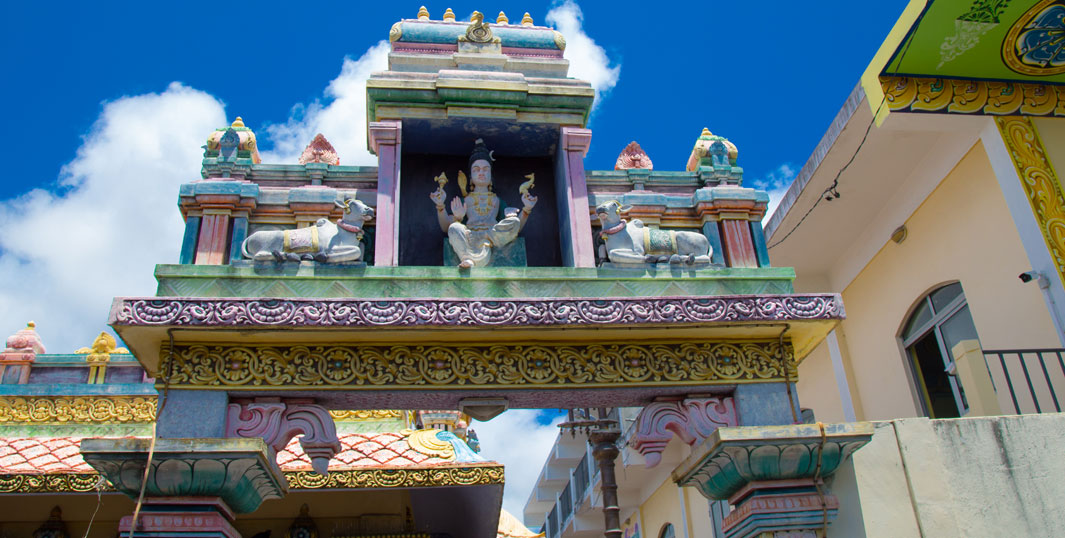 The Hindu temple in Goodlands is open to everyone.
Cap Malheureux
British troops landed here in 1810 during the Mauritius campaign. The old Catholic church with its bright red roof is now a major attraction. The public beach is very beautiful and worth spending some time at, even though there is not much else going on. From the cape, there is a wonderful view of the islands of Île Plate, Coin de Mire and Île Ronde. There are still fishermen here who sell their catch directly on the beach.
 The northernmost church in Mauritius.
Port Louis
The Citadel is probably a must-see, not least because the misery of the city is easier to view from above. Entry to the Citadel is free and a visit is worthwhile. You get a wonderful overview of the capital of Mauritius. The market by the harbour is interesting but completely overcrowded. Some of the fish and meat halls have appalling hygiene conditions. Do you need to see that? No.
 At the harbour in Port Louis.
Curepipe Botanic Garden
Not keen on a mixture of grapefruit mush and mass tourism? Then the Curepipe Botanic Garden is just the place. Of course, it cannot be compared with the large Sir Seewoosagur Ramgoolam Botanic Garden in Pamplemousses. But it is free, quiet and ideal for a stroll.
 A smaller, simple, tourist-free garden established in 1870.
Trou aux Cerfs
A volcano, 600 metres high and 80 metres deep. There is a lake inside the crater, although it contained little water when I visited. There are great views in every direction, depending on visibility that day. Interesting, but not spectacular. Naturally, it is free.
 A crater with a superb view across the island.
Le Domaine des Aubineaux
A beautiful botanical estate containing an equally beautiful colonial house. The house accommodates a museum and an attractive restaurant. By Mauritian standards, the restaurant has moderate prices and serves good food. Well worth seeing. Admission to the grounds is free.
 Colonial house with restaurant at Le Domaine des Aubineaux.
Grand Bassin
Several temples stand around a crater lake. Two kilometres before the complex, two enormous statues of Hindu gods have been erected; they are visually overwhelming. The site is interesting and offers an insight into several Hindu temples and religious ceremonies. Admission is free. Take off your shoes when entering a temple.
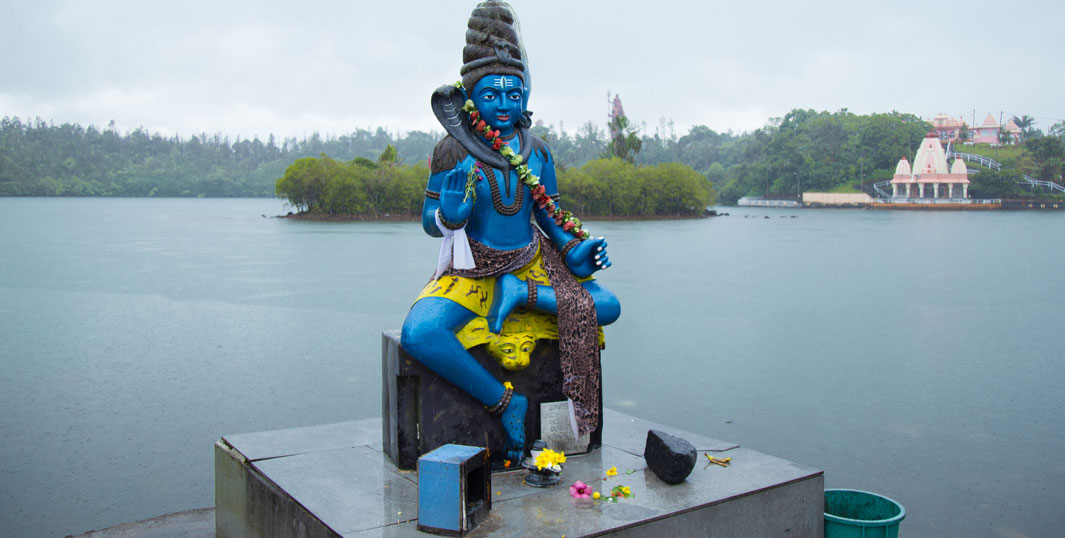 Considered a Hindu pilgrimage site in Mauritius.
Gorges Viewpoint – Black River National Park
After a short drive up into Black River National Park, you quickly reach the Gorges Viewpoint. At busy times, tourists crowd the place and selfie sticks are everywhere. The viewing platform offers a lovely overview of the valley and waterfall, but only in good weather. Otherwise, a few birds and monkeys hang around the rubbish bins overflowing with tourists’ waste. In front of the viewpoint are numerous stalls selling kitsch and junk, past which tourists are, of course, conveniently guided. The Gorges Viewpoint is free; various other tours in the park are subject to charges or can only be done with a guide.
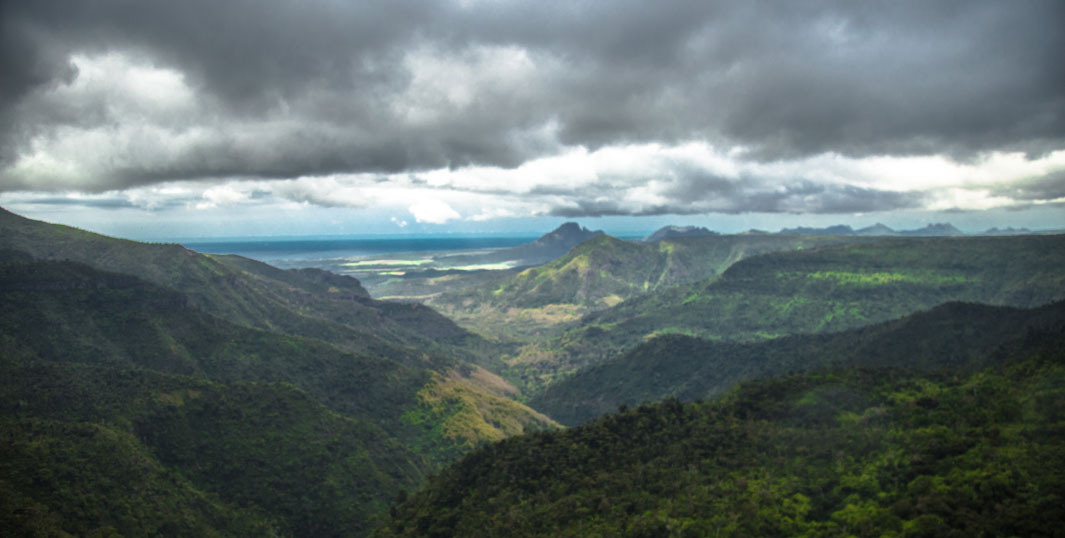 Black River Gorges National Park is on the UNESCO World Heritage Tentative List.
Île aux Cerfs
You can reach the island of Île aux Cerfs from, among other places, Trou d’Eau Douce. Options include catamaran, speedboat or a pirate-themed party boat with plenty of drinking. This is a first-class tourist hotspot. Masses of fresh “meat” are transported to the island, and prices are high everywhere. There is plastic rubbish in the bushes, as well as a large construction site. Half a kilometre farther on is a beautiful beach with an attractive restaurant. Unfortunately, the facility was accessible only to guests of the five-star resort with its adjoining golf course. Beaches that are supposedly so fantastic can also be found in similar form in public areas of the main island. Île aux Cerfs? Not really worth it.
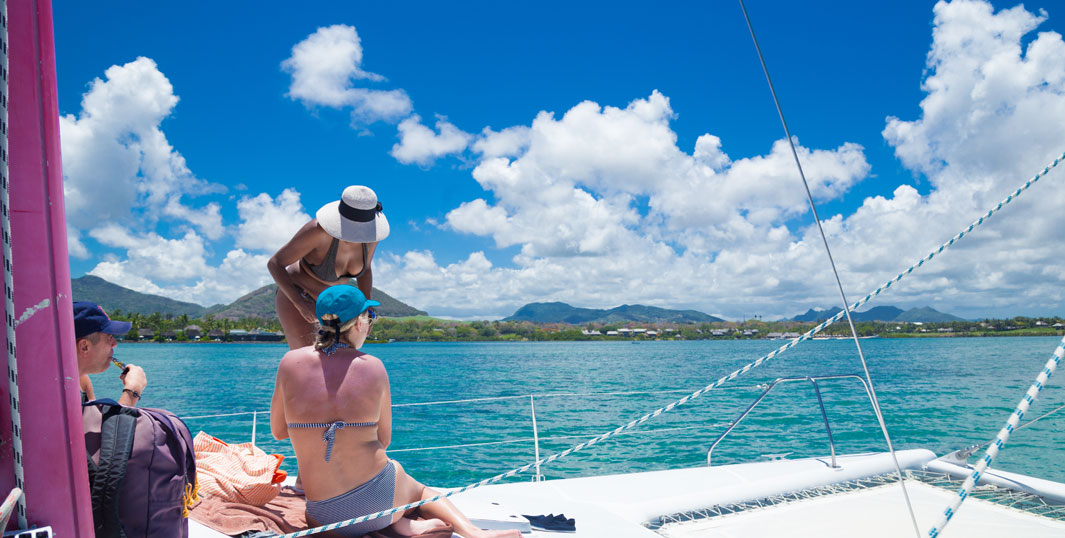 Catamaran trip to Île aux Cerfs.
It was also striking that every time I visited the south of the island, the weather was poor, while the south-east was always sunny. Coincidence? The people of Mauritius generally treated me with reserve but were friendly. There was never any pushiness when it came to shopping. Nor did I encounter the notorious African beach boys who constantly bother and annoy tourists. However, I found the attitude of many locals rather lethargic and uninterested. I asked one tour operator several times to send me a few offers – “yes, yes”, and nothing ever came of it. I also contacted several diving schools. All but one failed to reply. Making money does not seem to be a priority for the people of Mauritius.
I was also struck by the high alcohol consumption among many residents, despite alcohol of all kinds costing almost twice as much as in Germany. For those who cannot afford a whole bottle of spirits, rum is sold in many shops in plastic cups. Curiously, beer is very popular among many women. People like to meet at the beach, where they party and drink to loud music. The evidence is easy to spot the next day: overflowing rubbish bins and beer cans in the bushes. On public holidays, people also like to camp on the beach. This is permitted.
Conclusion: Anyone who does not research Mauritius carefully before booking or travelling runs the risk of being disappointed. In many respects, the island does not live up to its myth. If you stay in a five-star hotel with a spa, private beach lined with specially planted palm trees, golf course and excursions in air-conditioned buses with tinted windows, then you will certainly feel as though you are in paradise. But things look rather different in the villages behind the luxury hotels: rubbish, dust, dirt, building ruins and large numbers of stray dogs that reproduce unchecked and make a tremendous racket at night. There are also many flying foxes that make a noise at dusk.
In many respects, Mauritius is overrated and overpriced. This applies to the trip itself as well as to almost everything else. Depending on the travel season and departure airport, package holidays (all-inclusive) sometimes start at around 2,500 euros. At that price, you might as well add a few euros and go to the Maldives or the Caribbean, where the value for money at the hotels and in the surrounding areas is definitely better. An independent trip to Mauritius can be reasonably priced, but you then have to do without luxury. My general impression was that people had tried – or were trying – to turn the island into a luxury destination at all costs. In my view, that project has failed. Mauritius is Africa, and that is reflected in its appearance and conditions.
Anyone considering a trip to Mauritius would be well advised to do some research beforehand rather than immediately falling for glossy brochures showing turquoise seas. Rip-off merchants and tricksters: here, too, tourists are almost constantly being taken for a ride. It starts at the airport. In the arrivals hall you can hear loud birdsong and the sound of waterfalls. I did not encounter any such acoustic scenery in nature during my stay in Mauritius. I enjoyed my trip to Mauritius. Nevertheless, there are more attractive destinations in the world.
Facts
- Flight: From €500, depending on the departure airport.
- Accommodation: Low budget to luxury – depending on your wallet.
- Area: Mauritius covers 2,040 km². By comparison, Berlin covers 891 km².
- Money: The currency is the Mauritian rupee. Credit cards are accepted almost everywhere.
- Climate: A year-round destination, with temperatures of 25–30°C. There are major climatic differences between the east and west coasts.
- Flora and fauna: Unfortunately, there are very few animals on Mauritius; the plant life is all the more lush.
- Time: UTC+2 in summer and UTC+3 in winter.
- Medical: Vaccinations are not necessary.
- Getting around: Rental cars, rental scooters, buses and taxis.
- Food prices: Usually higher than at home.
- Language: You can get by with English or French.
- Entry: Passport required; no visa is needed with a German passport.
- Phone and internet: Even the cheapest accommodation offers Wi-Fi. SIM cards are available everywhere. 10 GB of LTE data cost €12.


Add comment