


Subcategories
Dominican Republic Article Count: 3
Peru Article Count: 2
United States Article Count: 2
Cuba Article Count: 1
- Details
- Hendrik Lorenz
- North, Central and South America
- Category: United States
- Read Time: 14 mins
- Hits: 8995
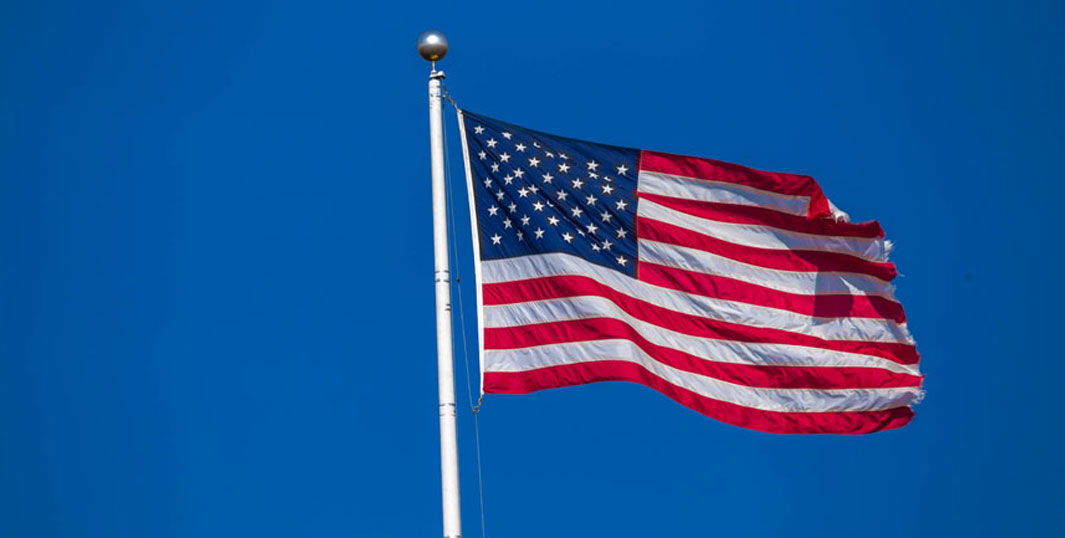 You see them everywhere... just imagine this here... unthinkable!
After 24 years, it was time to visit the much-praised land once again. New York City, however, was not necessarily my first choice of destination. From Berlin, the selection of direct flights to the USA is rather limited (since there is still no international airport available), and for just a few days, an extremely long flight or a stopover does not make much sense. The time lost would simply be too great. After doing some research, I found a good flight-and-hotel combination: seven days in New York for well under 1,000 euros. The low price was probably also due to the fact that this is not exactly the best or most popular time of year to visit. In summer, it is hardly possible to find anything halfway decent for this length of time for less than 1,500 euros. I would not have considered a pure city break at that price. For that amount, I would much rather have opted for an all-inclusive party-and-drinking holiday in the Caribbean.
So I flew across the Atlantic with AirBerlin at a civilised time of day. Beforehand, I had paid AirBerlin extra for a somewhat more comfortable seat, which ultimately turned out to be a bit of a rip-off. So, the first annoyance right at the start? No. I decided to sort that out after returning home. The flight went smoothly and was ultimately even ahead of schedule. Things got interesting at passport control, as you keep reading horror stories about extremely long queues and scandalous interrogations by US customs officers. But this time I was apparently lucky. Even though only three of what felt like 50 counters were open, I was through in 30 minutes. Left hand, right hand, left thumb, right thumb, a friendly smile for the camera, and that was it. So things can turn out quite differently from what people always write. The checks were much stricter in 1993, and I also had a much harder time getting through border control in Australia.
At John F. Kennedy International Airport (JFK), there are several ways to get into the city. A taxi is, of course, always the most convenient option. However, the cab costs around 60 dollars, plus a tip and possibly a toll, depending on the time of day. There are also minibuses and various other transport options, all of which can be booked online in advance. And then, of course, there is the good old New York Subway. It does not stop directly at John F. Kennedy International Airport. The driverless AirTrain serves two subway stations from the airport: Howard Beach and Jamaica. Both stations offer connections to all parts of New York City. Which station is best for you depends on studying the subway map. It is available for download on the MTA website (the operator of New York's subway system). There is also a suitable app in the App Store that is very useful when visiting New York.
The AirTrain costs 5 dollars. This has to be paid at a ticket machine at the transfer point to the subway. The machine looks like a relic from the past, but it works well. It accepts cash or credit cards. Once you have bought the AirTrain ticket, you can pass through to the subway. If you want to buy a 7-day Unlimited MetroCard for the subway (31 dollars), you have to get it from a machine here. You cannot do that at the AirTrain machines. Those only allow you to buy an AirTrain ticket combined with a single subway ticket for 8 dollars. It all sounds confusing, but it isn't. There are usually plenty of MTA staff members around who can help you buy a ticket.
The subway journey to Manhattan takes about an hour, although it can take longer depending on the day and time. My destination was 3rd Street near Union Square. This meant changing trains once at Broadway Junction. Unfortunately, the signs and passenger information in New York are not particularly user-friendly. Passenger information systems, maps and route plans are few and far between. It therefore makes sense to familiarise yourself thoroughly with the New York subway system in advance. It helps enormously. From the 3rd Street subway station to the hotel on 17th Street, it took me five minutes on foot. The hotel was easy to find and made a really quirky impression. See my report: Hotel 17. After a long flight and the time difference, there was not much left to do on my first day in New York, in the middle of the darkness. I just had a look around the nearby streets and got my bearings. A look into supermarkets and bars quickly brought home the fact that New York really is one of the most expensive cities in the world – at least Manhattan is. But that realisation was not exactly a surprise.
After a restless first night, I got going straight away. Outside, the sun was blazing, while the forecasts for the following days were not particularly promising. Naturally, I had to make the most of the good weather. Because of the forecast, Brooklyn was on the programme for the first day, partly so I could catch a glimpse of Manhattan's impressive skyline despite the weather. The first stop was the Williamsburg neighbourhood in Brooklyn. From there, I walked along Bedford Avenue towards Bushwick Inlet Park, a football field by the East River with a view of the Manhattan skyline. Right next to it is East River State Park, completely deserted and apparently still being redeveloped. I continued south, passing the abandoned Domino Sugar Factory. Unfortunately, the site was fenced off, so I could not get a look inside this impressive abandoned place. A little further on, beyond the Williamsburg Bridge, lies DUMBO (Down Under the Manhattan Bridge Overpass). It is a neighbourhood that is almost hidden beneath the Manhattan and Brooklyn Bridges. It also offers the finest view of southern Manhattan. I cannot recommend walking across the Brooklyn Bridge, even though it is very popular. Even in February, the walkway was so packed with tourists that I do not want to imagine what it must be like in summer. Even New York cyclists are thoroughly fed up, as tourists are constantly blocking the cycle path.


A better alternative is to continue along the East River towards Red Hook. The neighbourhood, once notorious for murder and mayhem and where Al Capone, who was born in Brooklyn, grew up and Albert Anastasia, boss of Murder, Inc., had his home, stands out for its old harbour facilities and partly Dutch-looking architecture. Many corners look as though they belong in the background of gangster films. It all has a certain charm, though. The old New York Dock Company is located on Inlay Street. Two huge warehouses that had not been used since the 1980s were supposed to be converted into exclusive apartments in the early 2000s. That idea was never realised, however, and the warehouses are still standing there much as they did more than 100 years ago. Red Hook must be really eerie at night. Unfortunately, Red Hook is also completely cut off from the New York subway network. Only buses run here.


Another interesting Brooklyn neighbourhood is Greenpoint. The northernmost part of Brooklyn was also once a working-class district, but today it is mainly inhabited by New York's middle class. Greenpoint, New York, is also often called Little Poland, as many people who still live here say they are of Polish descent. I did not notice that during my visit, though. There is a lot of construction and renovation going on in Greenpoint. Transmitter Park also offers a good view of Manhattan Island. A little further north, on Commercial Street, there is something special to see alongside the old industrial buildings. A neighbourhood initiative in Greenpoint has turned old boxes and canisters into a castle for cats. The feral predators of Greenpoint find shelter here and are also fed. In return, the cats keep the area free of troublesome rodents. A perfect deal between people and animals.


Back in Manhattan, I naturally had to tick off the obligatory sights as well. I skipped Chinatown and Little Italy, though. The crowds in these districts were simply too off-putting. Ground Zero, on the other hand, was a little quieter. The two footprints of the former World Trade Center are now memorial sites. The One World Trade Center, which opened in 2014, is enormous, but still seems smaller than it had appeared to me through the media beforehand. This is a major tourist hotspot – a trip to the observation deck costs a mere 30 euros. There is still a huge amount of construction going on around One World Trade Center. The redesign of the square is nowhere near finished. A little further along the Houston River, at the Battery Park City Esplanade, there is a ferry terminal. Boats run between New York City and New Jersey every five minutes. It is worth making a quick trip across and taking a look at southern Manhattan from New Jersey. The PATH Train (Port Authority Trans-Hudson) also runs to New Jersey. Its stations include 33rd, 38th, 14th Street, Christopher Street and World Trade Center, and it is much cheaper than the ferry. Unlike the New York subway, the PATH Train is very modern. Unfortunately, it does not accept the 7-day Unlimited MetroCard. A return trip costs 5.50 dollars. The PATH Train runs 24 hours a day. Hoboken, New Jersey, is also an ideal place to eat, as it is much cheaper than Manhattan. The cheapest ferry is still the Staten Island Ferry. It runs every 30 minutes between Manhattan and Staten Island – free of charge.


There are several small islands in the middle of the East River. One of them is Roosevelt Island, which is already part of the borough of Queens. The F subway line also stops there. Even in good weather, not many people find their way here. At the southern tip of Roosevelt Island is Franklin D. Roosevelt Park, which opened in 1974 and is practically an extension of the island. The park also incorporates the ruins of the Smallpox Hospital, the remains of a Gothic-style hospital that closed in the 1950s and subsequently fell into ruin. Today, the remains of the building look extremely eerie.
Things are a little quieter further north in Manhattan. An alternative to Central Park, for example, is Fort Tryon. This park is located in the Washington Heights neighbourhood and opened in 1935. It offers impressive views west across the Hudson River and east towards the Bronx. Incidentally, just before Fort Tryon Park, near the 181st Street subway station, the small Bennett Park marks the highest point in Manhattan. I rather liked the area around 181st Street in general. It was less polished and strongly reminded me of Berlin neighbourhoods such as Neukölln or Gesundbrunnen.


New York City has a lot to offer – including plenty of beaches. The Far Rockaways, for example, are quite a long way out. Hardly anyone finds their way here, especially in winter. The island was predominantly Jewish in earlier years, but the social makeup has changed considerably since then. It takes more than an hour to reach New York City's most popular Atlantic beach from Manhattan. Even in winter, there are daring people surfing the waves of the Atlantic.
Unfortunately, the weather in New York City is unpredictable. After temperatures of 15 degrees and sunshine, winter returned with a vengeance the very next day. New York disappeared under a blanket of snow, ruining quite a few plans. Sadly, the snowstorm meant that Queens and Staten Island were out of the question. There was not much left that I could do in the short time remaining. A brief visit to Brooklyn's Saratoga Avenue, where the notorious Murder, Inc. once had its headquarters, and the rediscovered 1965 election poster on Flatbush Avenue brought my final day in New York City to a close.


Conclusion: The seven days in New York were very interesting. Unfortunately, I managed to complete only half of the programme I had planned, due to the changeable weather and other circumstances. There is an incredible amount to discover in New York City, even far away from mass tourism. Depending on your interests, New York City has plenty to offer everyone. I definitely have to go back and make up for what I missed. Everyone should be prepared for the extremely high prices of just about everything – that is unfortunately the other side of the coin. It was a great, exciting, but also exhausting week. I saw and learned a lot and met some wonderful new people. I can recommend the city, even though I think many things are vastly overrated. I found entering and leaving the USA an absolute nightmare. At Terminal 8 in particular, there was unbelievable chaos at security on the return journey, unlike anything I have experienced even in a Third World country. It will make many people think twice about coming back – but perhaps that is the strategy.
Here are a few tips as well. I do not want to write too much, as there are plenty of websites that specialise professionally in travelling to New York.
Money
It is best not to exchange any money at all and to pay for everything by credit card. However, tipping is practically compulsory in the USA, so the little people such as chambermaids, bellhops or the veteran in the subway would otherwise go away empty-handed. Never exchange cash at the airport; you will get almost nothing for your euros there. It is better to withdraw cash from an ATM or exchange money in the city. Exchange services generally take a hefty cut, so get only as much cash as you need, otherwise you will end up making a lousy deal. It is also possible to leave a tip by credit card. Simply write the amount you actually want to be charged below the original amount on the receipt.
Entry into the USA
As mentioned, there are plenty of horror stories on the internet about the US entry procedure. Sometimes they may be true, but that does not necessarily mean it will happen to you. Nor is it necessary to carry printouts of every document, such as your return ticket (which is digital anyway these days), hotel reservation or ESTA form (which is already stored on the officer's computer). You may not even have to go through an interview. I was simply waved through. Overall, I found leaving the country (total chaos) worse than entering it.
Prices
Overall, I found New York extremely expensive – everywhere, but especially in Manhattan. Eight euros for a beer in a bar and 13.50 euros for a pack of cigarettes are just two examples. Anyone planning a trip to New York should therefore have sufficient funds. I also fail to understand what is supposed to be so great about shopping in New York. Everything available there can also be bought back home – more cheaply. In addition, you are only allowed to bring goods worth 430 euros into the country. If you exceed that amount and get caught, you are in for a very bad time. The only reasonably priced thing in New York is the subway. It really is cheaper than ours.


