


At eleven, hardly any child thinks about their future career or the quality of their education. Compulsory schooling is a nuisance, and parents decide where the journey is going. No objections allowed. In 1981, my mother — an enthusiastic do-gooder, eco-minded Green from the very beginning — came up with the brilliant idea of taking me out of the evil state school after four years and sending me to the institution in Ottersberg then known as the ‘Free Rudolf Steiner School’. Today it is known as the Free Waldorf School, or simply the Waldorf School. Thanks to income-based fees, single parents and families on low incomes could afford a private school at the time. I still do not know why my mother considered this particular educational path a good idea. I was the one who initially had to deal with the consequences. From then on, I had to travel around 50 kilometres every day to collect my new education.
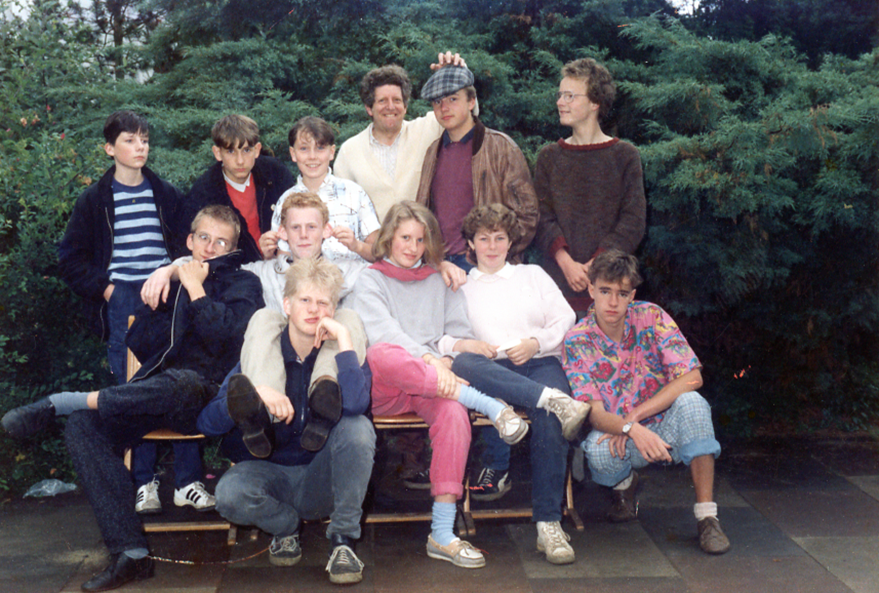
In 1981, I ended up in class 5b at the Waldorf School in Ottersberg. Only later did I learn that this class was considered a Waldorf experiment. It mainly admitted pupils who had previously attended state schools. It was a classic ‘balcony class’, because there was no other B class in the remaining year groups. We were the guinea pigs in an educational experiment for which nobody had asked our consent. Our class teacher, Reinhold W., clearly had considerable problems with this motley group of former state-school pupils. The different abilities and personalities in the class seemed to push him to his pedagogical limits on a regular basis. Instead of demonstrating confident leadership, he repeatedly reacted with fits of rage. His outbursts were legendary, but rather than strengthening his authority, they increasingly undermined it. Over time, hardly anyone took him seriously or showed him genuine respect. What was presumably intended as pedagogical authority turned into an involuntary laughing stock. This did not exactly make the already difficult arrangement of the experimental B class any easier.
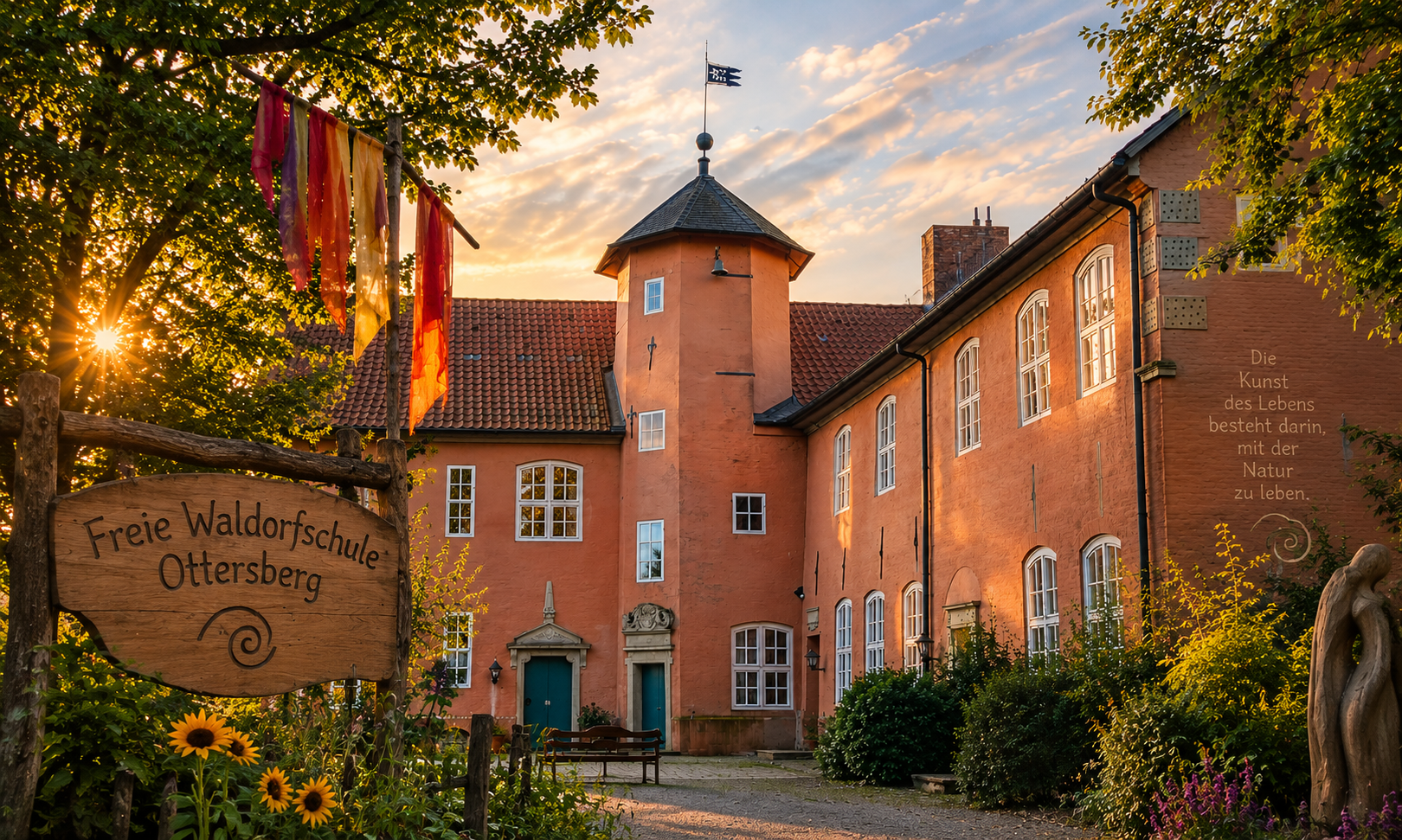
I found it very difficult to settle into the Waldorf world. The curriculum, structures and methods differed considerably from what I had known. The school building itself was hardly welcoming: an old moated castle with adjoining extensions in typical Waldorf architecture. Romantic to some, but to me it looked like the setting for a horror film. A portrait of Rudolf Steiner hung in every classroom. Because of the chosen perspective, it seemed as though his face followed every pupil, regardless of where they were sitting. While maps or historical figures decorated the walls elsewhere, here the spiritual patriarch personally supervised every lesson. It was rather creepy and reminded me more of a cult than an ordinary school.
The first year was a disaster. Eurythmy in particular — an anthroposophical movement art in which speech and music are represented through prescribed gestures — was a thorn in my side. While other pupils were memorising vocabulary, I was allowed to discover the spiritual dimension of flailing my arms about. And no, I did not have to dance my name. That joke is as worn out as the Nazi club routinely wielded against anyone who is not firmly left-wing today.
After about a year, I got used to the school system. Practical workshops, gardening and the block-based lessons in history or natural sciences suited me quite well. The Waldorf School did have some sensible approaches, unfortunately embedded in a great deal of ideologically questionable and sometimes unrealistic thinking. I struggled with foreign languages, especially French. Compulsory music lessons were also a pure ordeal. I hated having to play the violin and, for lack of talent and discipline, never achieved anything worthwhile. What a waste of time and pedagogical effort. I also remember the school canteen at Amtshof with mixed feelings. The food selection was so alternative that even hunger occasionally gave up. What may have been ecologically valuable and ideologically correct rarely convinced my stomach — or caused it to empty involuntarily. I therefore often set off on the journey home hungry after lessons. If I was lucky, another parent would give me a lift to Verden. Otherwise, there was an hour-long bus ride through all the surrounding rural villages. If no lift was available or the bus was late, I often hitchhiked to save time. At that time, this was still quite straightforward.
It was not until seventh grade that I began to enjoy lessons in Ottersberg. My performance improved, and I gradually found my place in a system that still seemed strange to me. The class, however, continued to shrink. Numerous parents had their children transferred to class A because they feared that their academic development was at risk in class B. Some Waldorf supporters held considerable prejudices against pupils from state schools. They were regarded as uneducated, stupid, proletarian and consumer-oriented. The full cliché package. Ordinary everyday objects such as televisions and the home computers that began to emerge in the mid-1980s were particularly suspect to some Waldorf devotees. While technological development was gathering pace, parts of the anthroposophical milieu apparently viewed modern media as a threat to the spiritual purity of the next generation. The world was becoming digital, while Steiner continued to set the tone at school. I too was pressured to avoid certain media and technological innovations. The corresponding anthroposophical appeals, however, left me pretty cold. A lasting conflict developed between my mother's ideas, the school's expectations and my own interests. I had little desire to be told which technologies were supposedly damaging to my intellectual development.
In eighth grade, I became increasingly comfortable with the school system. My grades improved again. The class play ‘Woe to Him Who Lies!’ by Franz Grillparzer in particular stayed with me. With the B class, we toured Germany, Austria and Switzerland and performed at other Waldorf schools. Theatre, working together and travelling were enriching experiences. But just as things were finally going well in Ottersberg, the next move was already looming. This time it was to Braunschweig. After a so-called ‘entrance examination’, I was admitted to the ninth grade at the Waldorf School in Braunschweig. The new school turned out to be the exact opposite of my previous experience: full classes, considerable academic pressure and correspondingly much higher expectations.
Only later did I learn that the school was competing with other private schools in the city, including the CJD Christophorusschule. Apparently, even anthroposophical education was about parents with money and high-performing pupils. Anyone paying high school fees expects results. High-achieving and gifted pupils are not just educational success stories; they are also attractive advertising. In 1986, I was expelled from the Waldorf School in Braunschweig. At the time, I saw the expulsion as proof of a lack of intelligence and ability. In retrospect, that conclusion is questionable. Academic failure neither measures a person's full potential nor automatically explains why an educational career goes off track. It later turned out that quite a few of my classmates followed me. I was by no means the only pupil whose school career ended prematurely.
Five years in Ottersberg and the inglorious finale in Braunschweig left me with mixed memories of the Waldorf School. In Ottersberg, I benefited from practical workshops, gardening, block teaching and theatre. At the same time, I found eurythmy difficult to endure and detested playing the violin. I struggled with endless journeys to and from school and experienced the limits of an educational system whose pedagogical ideals did not always keep pace with reality.
Being expelled from the Waldorf School did not mean that returning to a state school was easy. Quite the opposite. After years in a completely different learning environment, I had to adapt once again to unfamiliar structures, different expectations and an unfamiliar style of teaching. What may have looked from the outside like a return to normality was anything but easy for me. I had been caught between two school systems and initially felt truly at home in neither. Nevertheless, I eventually found my own way. My educational path was anything but straightforward, but life rarely sticks to a curriculum. Being expelled was not the end of my opportunities, and the difficulties I experienced back then were not a final judgement on my abilities. I first had to learn to set my own standards instead of measuring myself solely by whether I fitted into a particular system.
By now, I have made peace with the Waldorf School. That does not mean I have subsequently adopted the anthroposophical worldview, nor that I suddenly regard all my experiences back then as wonderful. Eurythmy will probably never become one of my favourite activities, and even today I can only shake my head at some of the teaching methods. In retrospect, the Waldorf School was neither pure ruin nor the promised pedagogical enlightenment. It was part of my life, with light, shade and a fair amount of ideological nonsense. I learned things there that were useful to me later. The word ‘free’ on the school sign certainly did not give me the freedom I needed at the time. I had to work that out for myself later. Today I can look back on that period with a healthy dose of irony, without resentment and with many good memories. The Waldorf School is part of my story. And that is probably a good thing.



 1. Regarding the sound ...


Comments