


 Berlin-Wedding, a supposedly deprived neighbourhood
When I was passed straight from university to the social welfare office in 2002, I was looking for a place to live in Berlin, fresh from the Lower Saxon Leine backwater. My social status ruled out respectable middle-class neighbourhoods from the outset. Zehlendorf, Steglitz, Charlottenburg and the like were out of the question. The trendy districts such as Friedrichshain, Kreuzberg and Prenzlauer Berg were not an option either; their residents' hip 1970s retro looks made my eyes hurt. At that time, there were still Hauf of flats available in the supposedly nationally liberated eastern part of the city or in Berlin's deprived neighbourhoods. As early as the beginning of the 2000s, the media had made a habit of picking a district in the young capital and hammering away at it for years. The word “Wedding” came up very often in connection with dirt, crime and an alleged foreign takeover. I had not yet had any personal contact with this part of Berlin. That was soon to change.
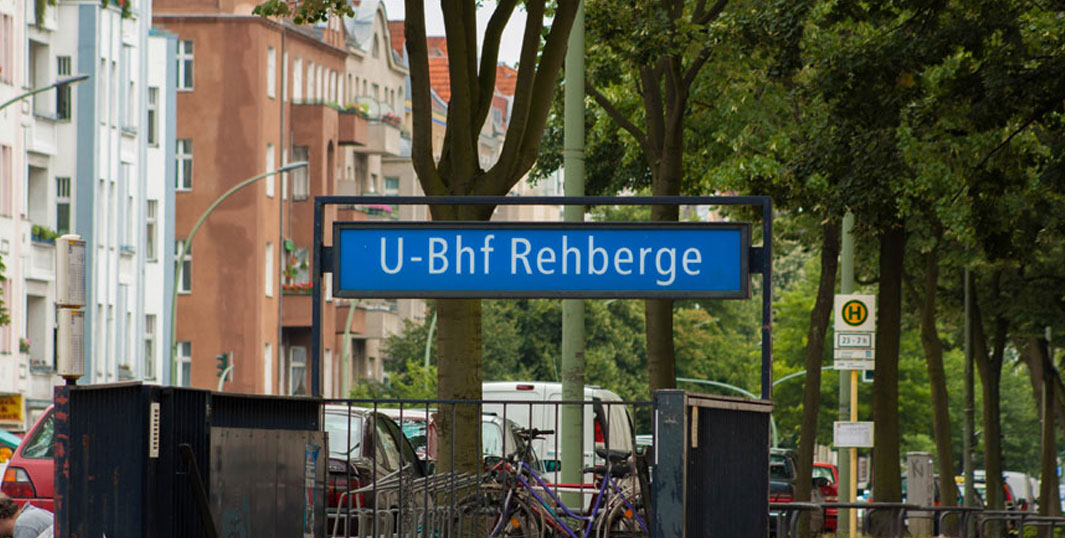
In the early 2000s, flats were still advertised the traditional way, in newspapers. The major online property portals did not yet exist. “Living in the new centre” was the respectable-sounding headline. The price was right, too: 300 euros including utilities for 50 square metres. So off I went. When I emerged from Rehberge underground station, I quickly realised that this area had very little to do with the “centre”. Müllerstraße seemed to overwhelm me with its noise and its many kebab shops and bargain stores. So this was the notorious Wedding everyone was talking about. I turned off Müllerstraße into Dubliner Straße, where the advertised flat was located. Suddenly, everything looked completely different. Peaceful, nostalgic and quite pretty. You could barely hear the noisy Müllerstraße. “The flats here are almost impossible to rent out. We have to let them at barely economic rates,” the property manager sighed. The flat itself was a shock: shabby and filthy. My shoes stuck to the wooden floorboards. The manager noticed my limited enthusiasm. “There's another vacant flat next door. Why don't you have a look at that one?” So I did. This one was already better. With a little initiative, something could be made of the old apartment with its street-facing window. The deal was done. I did not have to fight off annoying competitors for this flat. There simply weren't any at the time. And so I had arrived, right at the bottom. Wedding was the end of the line.
During the first few weeks, I got to know my new neighbourhood and district. I quickly realised that Wedding itself, within its original boundaries, was not bad at all. There was plenty of greenery, many well-preserved buildings from the Wilhelminian era, affordable rents and excellent infrastructure. Somehow, though, the district's boundaries were not recognised in public discussion. Many of the negative stories about “Wedding” actually came from the neighbouring district of Gesundbrunnen. Why the media kept associating Gesundbrunnen with Wedding – and still do today – remains a mystery to me. Look at a map and it is obvious that these are two different districts, not one combined district called Gesundbrunnen and Wedding. To me, it was always clear: Gesundbrunnen is not Wedding, and vice versa. Why give districts names only to mix them up in every area of life later on? Whenever visitors from outside Berlin announced they were coming, they soon asked which district I lived in. If I said “Wedding”, the responses were things like “Oh dear, perhaps I'll think twice” or “Wow, that's really rough – you've ended up in a ghetto!” Nationwide, the reputation of Berlin's Wedding district has been ruined by the media's inaccurate geographical reporting.


For me, the biggest eyesore in Berlin-Wedding is still Müllerstraße, including Leopoldplatz. At most, these places can be compared visually with parts of Gesundbrunnen. The proportion of foreign residents in Berlin-Wedding is also much lower, quite apart from the crime figures. I lived in Berlin-Wedding for ten years and, during that time, experienced little more than the kinds of incidents that happen in any large German city: a shooting outside a Croatian restaurant, the Schillerpark bomber and a murder in a kebab shop. Those were the only significant negative events I can remember. In 2012, I left Wedding with a heavy heart. The reason was a change in my professional life and the steady decline of the apartment building. By the end, I could barely say the names on the doorbell panel without spitting. As the tenant profile changed, so did the amount of rubbish lying around – and not just in my building. Even though most people living in Berlin-Wedding do not belong to the social elite and do not have the sun shining out of their backsides, I felt very much at home there.
Today I live further north in the city, in Märkisches Viertel. It is a neighbourhood with an equally problematic reputation. But here the media draw clear distinctions. Neighbouring districts such as Wittenau are strangely never mentioned in the same breath when negative stories are reported. Why is that?



Comments