


 Right through the tourist centre...
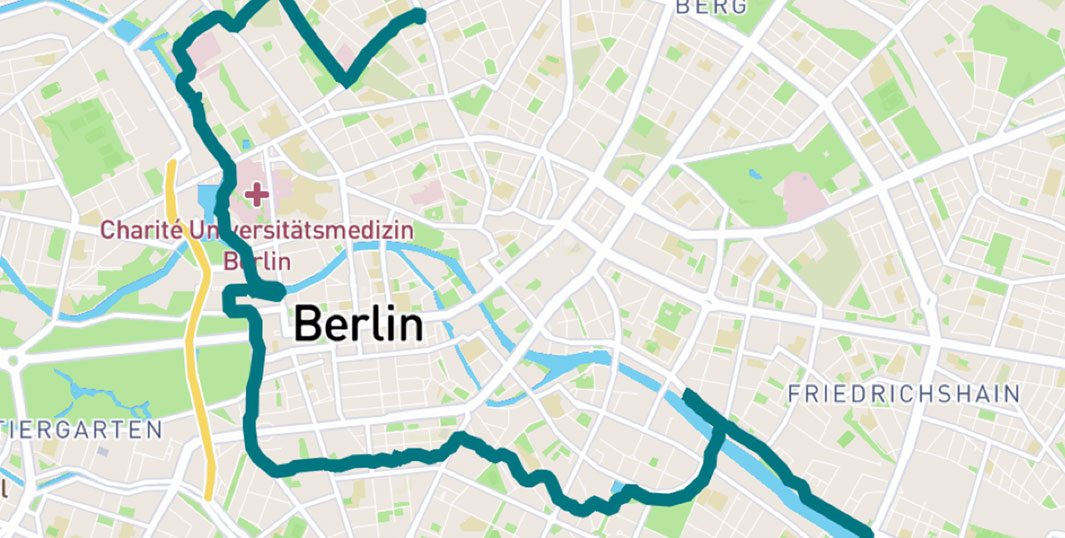
If the madness surrounding masks, lockdowns and flu viruses has had one positive side effect, it is that Berlin is currently completely free of tourists. I had been dreading the walk through central Berlin for a long time. Streets and paths packed with people from all over the world can be exhausting. Today, however, it was genuinely lovely—almost deserted. Where there is usually a constant bustle and crowds gathering, there was nothing but emptiness. I started at Oberbaum Bridge on the Kreuzberg side. Along the East Side Gallery, where people normally jostle for space, the way was clear all the way to Schilling Bridge. I continued along Bethaniendamm, following the outer edge of Kreuzberg westwards. On Sebastianstraße, I came across a memorial plaque commemorating the legendary escape tunnel, known as “The Betrayed Escape Tunnel on Sebastianstraße”. On 28 June 1962, escape helpers entered a cellar in a house on GDR territory through a tunnel and walked straight into a Stasi trap. The escape attempt had been betrayed by an unofficial informant. Escape helpers Noffke and Hötger were shot; Noffke died of his injuries, while Hötger was seriously wounded.


I had my doubts when crossing Friedrichstraße, since Checkpoint Charlie is one of the city’s best-known tourist attractions. But there was not a soul in sight. I moved on quickly anyway—who needs this rather kitschily staged border crossing? Crossing Wilhelmstraße, I passed an imposing building: the Federal Ministry of Finance, formerly the Reich Aviation Ministry under Hermann Göring. The neoclassical building survived the war relatively well and was extensively renovated in the 1990s. Opposite the ministry is the Topography of Terror exhibition. I visited this exhibition once in the mid-1990s and found it rather dry, overly detailed and simply exhausting.


The next stop was Potsdamer Platz, followed by Voßstraße, where Hitler’s headquarters and bunker once stood, then the Brandenburg Gate and the Reichstag. In between is the Memorial to the Murdered Jews of Europe. At the Reichstag, I had to take a detour because the area had been cordoned off over a wide radius, blocking the actual Wall Trail. Along Reichstagsufer, I could admire the architectural legacy of the construction boom in the 1990s—an incredibly ugly mass of concrete. Things became more pleasant when the trail passed through Invalidenfriedhof cemetery. The impressive cemetery was almost completely destroyed by the division of Germany. Remains of the inner border wall can still be found on the grounds. Famous figures such as Richthofen (the Red Baron), Moltke, Scharnhorst and Puttkammer are buried here. Members of the SS and the Nazi Party were also laid to rest in this cemetery, although their grave sites have since been made unidentifiable.


About a kilometre north-east of Invalidenfriedhof, the Wall and death strip crossed another cemetery. The Domfriedhof of St Hedwig’s parish still bears the marks of Germany’s division. At the corner of Liesenstraße and Gartenstraße, a last forgotten section of the Wall remains, next to the disused half-timbered bridge on Liesenstraße. Further remains of the inner border wall can be found inside the cemetery. A kilometre farther on is the Berlin Wall Memorial on Bernauer Straße, a huge complex that has been turned into a kind of museum and includes a recreated death strip. Bernauer Straße was also known for its many escape tunnels to the East. Today, several documentation centres there deal with the events of the divided years. The tenth stage ended at Bernauer Straße underground station.





Add comment