


At the former Chausseestraße border crossing, the construction of the Berlin Wall did not even stop at a cemetery. The death strip simply wiped out a large part of Berlin’s oldest Catholic burial ground. Even today, the broad open space in the cemetery makes the former border strip clearly visible, although new graves have since been added. The south-eastern part of the cemetery largely survived and remained in a kind of Sleeping Beauty slumber for decades. Close to the border installations, only certain people were permitted to enter the cemetery.
Clear traces of the former GDR border fortifications can still be found in the graveyard. In the northern section, parts of the rear border wall remain. At the corner of Liesenstraße and Gartenstraße, a section of the front barrier element of the border wall has also survived, although the side facing the street has suffered considerable damage.
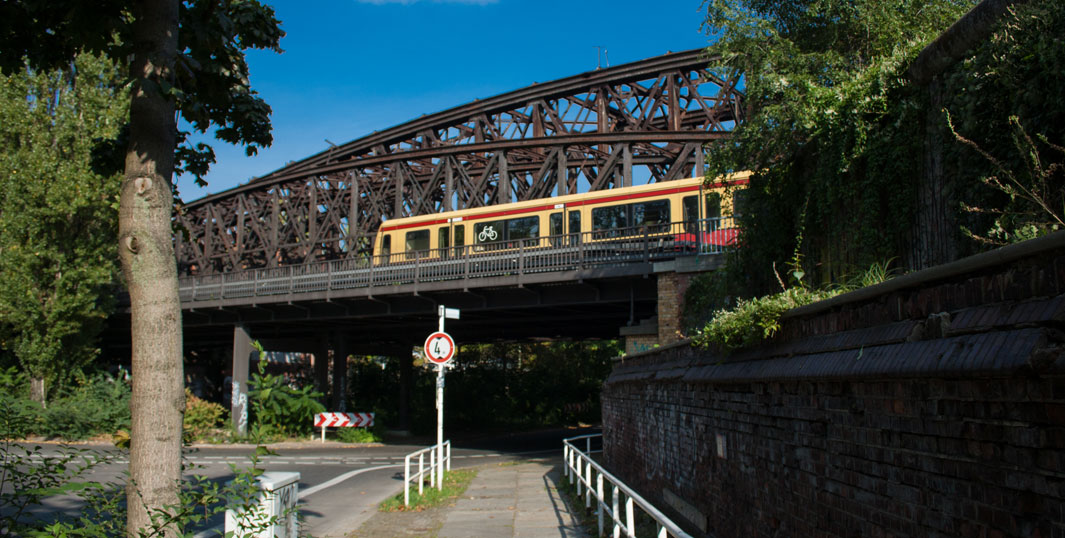
Right beside the Domfriedhof St. Hedwig cemetery stands another large, rusty relic: the so-called Liesen Bridges. These are two steel-truss bridges built between 1890 and 1896. One carried a single track and the other two tracks. A newer bridge was built alongside them and is now used by rail traffic. The Liesen Bridges have been rusting away for around 70 years. In everyday speech, they are also known as the “Wasting-Away Bridges”. The nickname goes back to the 1920s and 1930s, when many homeless people had to set up makeshift shelters beneath them because they could not find or had lost accommodation. People living in the miserable shacks quickly contracted serious illnesses.
The future use of the disused listed structure has been debated repeatedly. One investor wanted to turn the bridge into a hotel; others proposed converting it into a green pedestrian route.






 1. Regarding the sound ...


Add comment