


- Details
- Hendrik Lorenz
- Southeastern Europe
- Category: Serbia
- Read Time: 6 mins
- Hits: 10145
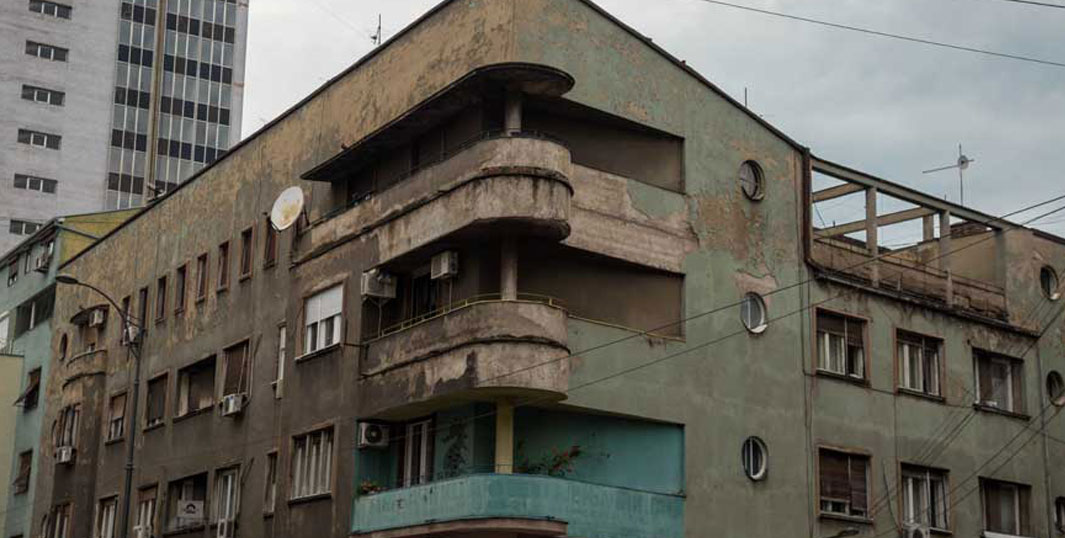 Post-Soviet architecture...
The last time I visited the Balkans, the country was still called Yugoslavia. That was in 1987, in what is now Croatia. Then came the Yugoslav Wars, followed by many years in which I did not return. In recent years, however, new connections to the Balkan region have gradually appeared. It was time to take another look at the former realm of Tito.
Niš may not mean much to many visitors, but it is Serbia's third-largest city and has a remarkable history. The Romans conquered the settlement, and Constantine the Great was born here. The Bulgarians came after the Romans. Niš therefore has a varied past that is still reflected in the city today. Despite NATO bombing, the city came through the Balkan conflict relatively well. With around 260,000 inhabitants, there is plenty to discover.
Since 2016, Ryanair has served the regional airport of Niš twice a week from Berlin, on Thursdays and Sundays – ideal for a long weekend. There was, however, one drawback: Berlin-Schönefeld Airport. The former East Berlin airport had been a constant source of frustration for years, and its poor connections could add up to an hour and a half to a journey. As expected, Schönefeld was a headache again. Terminal D was in chaos, with a security queue stretching through the building, frustrated passengers trying to get around the barriers and overwhelmed airport staff. After almost an hour I finally got through. The flight to Niš took about 1 hour and 40 minutes. Niš Constantine the Great Airport was small, worn and functional rather than grand. Currency exchange was available at the airport, at the same rate as in town. The bank counter was outside the terminal, next to the kiosk.
The best thing about Niš Airport is its location: the runway is only about four kilometres from the city centre. A taxi is the quickest option; drivers approach arriving passengers right outside the terminal. A ride into town should cost no more than five euros. Bus 34A is cheaper. Its rather inconspicuous stop is to the left of the terminal entrance, and the bus goes to the central bus station. From there it is only a short walk to the fortress. A ticket costs around 50 cents. Several private transfer companies can also be booked online.


My first walk through Niš took me across King Milan Square, past the fortress and towards the market around Duke Dinić Street. Even later in the day it was still lively. The city initially reminded me of Romania: plenty of historic substance, much of it slowly falling into disrepair, and a shortage of investors. Historic buildings stand beside architectural oddities from the socialist 1970s and 1980s. Small late-night shops and Serbian grill stands line the streets. The centre also has many attractive, cosy restaurants and bars. Unfortunately, smoking is permitted in most of them, and plenty of customers take advantage of it. Prices in Niš are very low. Half a litre of Serbian beer costs no more than €1.50. McDonald's is comparatively expensive, while street food is much cheaper. Anyone who leaves without trying Serbian grilled specialities has missed out: a huge portion of minced meat in bread with salad costs only about €1.40. The historic centre is compact, but it is worth wandering around without a fixed destination. There are many free-roaming dogs and plenty of curious sights. The old cemetery on Branka Radičevića Street is particularly unusual. No one has been buried there since 1971, and the site has been left to decay. Dogs have now taken over the grounds. The deeper you venture among the overgrown and partly collapsed graves, the more dogs begin to bark. At dusk, the place can be decidedly eerie.
In the rain, Niš Fortress was almost deserted apart from a few school groups. The grounds are well maintained, although the graffiti on the walls is unpleasant. There is a museum as well as several cafés and bars. The fortress is interesting, even if it lacks one truly outstanding attraction.


More compelling is the former concentration camp of Crveni Krst, about 500 metres beyond the fortress. The name means “Red Cross” – hardly something one would associate with a concentration camp. The site is in good condition. It feels somewhat inappropriate that the ticket office is located in the former guardhouse, still decorated with an original swastika and SS symbols. Admission cost 1.50 dinars, roughly €1.20. I was the only visitor during my visit. The exhibition in the three-storey main building was very informative, and the small cells beneath the roof give a vivid impression of the conditions prisoners endured. Around 30,000 people were imprisoned here between 1941 and 1944, and 12,000 were murdered nearby. Although this is one of the smaller and less well-known camps, it is definitely worth visiting.
The next stop was Ćele Kula, the Skull Tower, just outside the city. The Ottomans built this monument in the early nineteenth century. Its foundations contain the skulls and bones of Serbian rebels and were intended as a warning to the population. A building was later erected around the tower to protect it from theft and vandalism. After so much death and suffering, I wanted to end the day with something different.


Verdict: Niš is an interesting, affordable destination with a great deal of history. The fortress, the former concentration camp and the Skull Tower are all worth seeing, while the food and drink are remarkably inexpensive. The city is not polished, but that is part of its character. It is well suited to a long weekend and deserves more attention.


