

- Details
- Hendrik Lorenz
- Category: Blog
- Read Time: 2 mins
- Hits: 3192
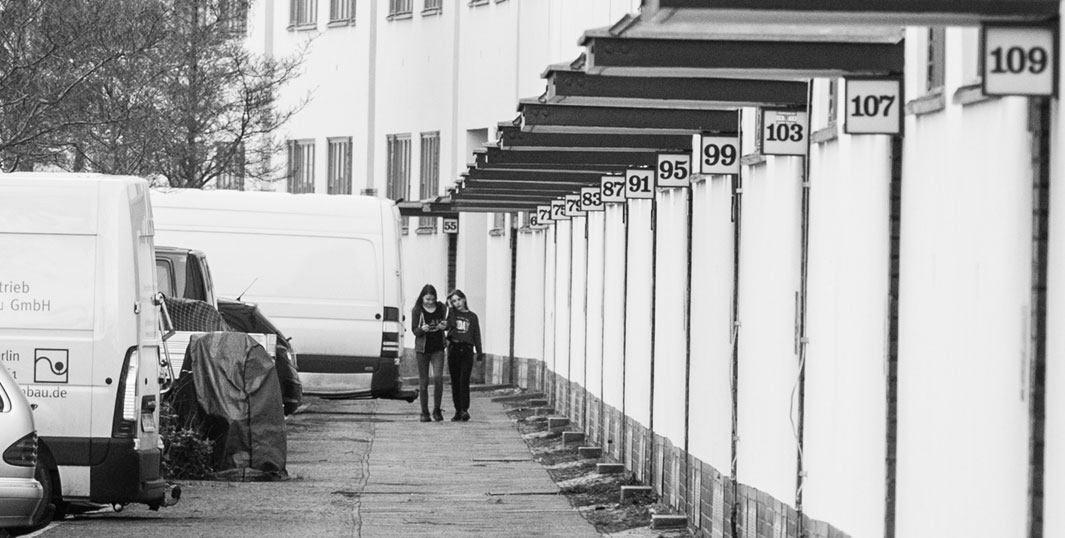
Siemensstadt. The name says it all. It suggests living and working. That was more or less the idea when this housing estate was designed and built. At the end of the 19th century, the Siemens company was based in Kreuzberg under the name Telegraphen-Bau-Anstalt von Siemens & Halske. The internationally successful industrial company grew rapidly and eventually had to relocate its production facilities. The choice fell on an area between the southern Jungfernheide and the River Spree, in what is now the district of Spandau. The reasons included convenient access to rail transport, the waterways of the Spree and the district’s low land prices. There was also no industrial competition in the area at the time that might have tempted workers away. Huge factory buildings soon sprang up, and as many as 3,500 workers travelled there every day from Spandau, Berlin and Charlottenburg. For many workers, however, the daily commute was too much of a burden, and despite the good wages they looked for work elsewhere. Plans that had been discussed for some time to improve the infrastructure around the factories were now put into practice. Roads and transport routes were laid out, and residential buildings followed. Many of these buildings were examples of the architectural movement known as Neues Bauen (New Building). The Siemensstadt housing estate also represented an entirely new type of social housing. Today, the Siemensstadt estate is part of a UNESCO World Heritage Site.


 1. Regarding the sound ...