


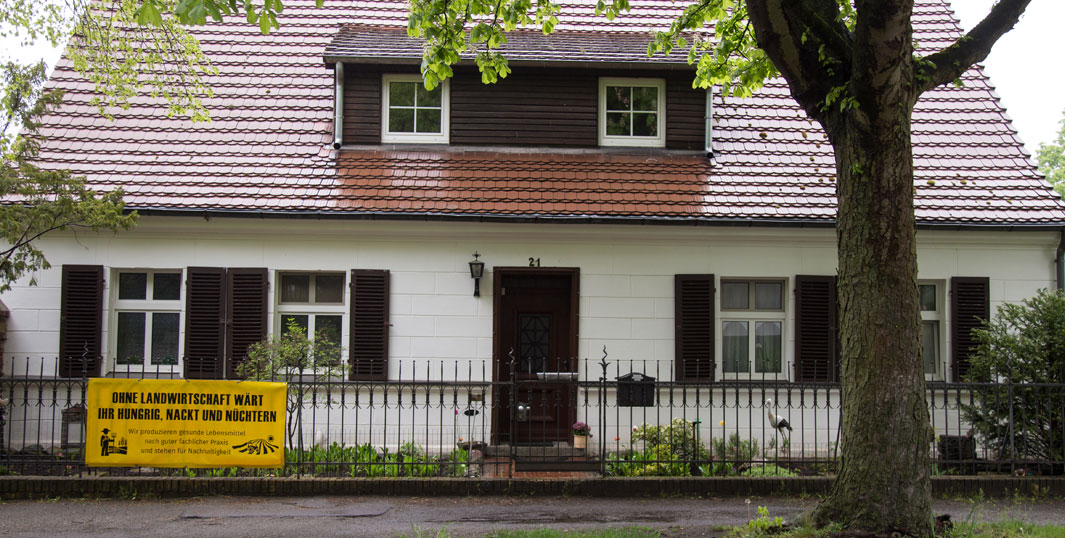
Just beyond the large Märkisches Viertel housing estate, Quickborner Straße leads into a wonderfully peaceful corner of Berlin. The high-rise buildings disappear, the road passes a leisure park and broad green spaces, and suddenly you find yourself in the village green of what is one of Berlin’s oldest and arguably most beautiful villages. First mentioned in a document in 1247, the place seems to have been left untouched by time.
There are old-fashioned cobbled streets, horse farms and farmyards, 19th-century houses decorated with stucco, and even a thatched-roof house in comfortable, old-fashioned Alt-Lübars. A Baroque church stands in the centre of the village. Although Lübars was surrounded by the Berlin Wall during the GDR era, it developed into a popular destination for day trips after reunification. The Eichwerder Moorwiesen wetlands in neighbouring Brandenburg and the lowland moors in Blankenfelde added to the appeal. Many cyclists and hikers following the Berlin Wall Trail stop in Lübars to admire the historic village centre.
At the beginning of the 1990s, farmer Helmut Qualitz brought Lübars a little extra fame. At the time, many provisional border crossings were being created in Berlin. Lübars, however, was still completely enclosed by the Wall. Qualitz decided to take matters into his own hands. He drove his tractor down Blankenfelder Chaussee, broke through the Wall at the end of the road and continued into the neighbouring village of Blankenfelde. At that time, Blankenfelde was officially still in the GDR. The unofficial crossing he created became known locally as “Checkpoint Qualitz”. A memorial stone at the crossing commemorates the event. Helmut Qualitz died in 2016.
In 2012, the murder of Christin Rexin brought Lübars to national attention in the press.





 1. Regarding the sound ...


Add comment